Dual-Luciferase® Reporter Assay System

同一サンプルからホタルおよびRenillaルシフェラーゼを連続測定
- 共トランスフェクションしたRenillaルシフェラーゼを内部コントロールとして用いることによる、データの正確性と再現性の向上
- 同一の細胞溶解液からホタルおよびRenillaルシフェラーゼ活性を連続測定でき、補正用にサンプルを別のウェルへ分ける必要なし
- 7桁にわたる直線性と、GloMax® Discoverなどの高感度ルミノメーター使用時におけるアトモル(10⁻¹⁸mol未満)レベルの感度
- pGL4 Luciferase Reporter VectorsおよびDLReady™認証ルミノメーターとの適合性
- 2基のインジェクターを備えたルミノメーターの使用
Catalog Number:
Size
Catalog Number: E1910
Catalog Number: E1960
Catalog Number: E1980
Dual-Luciferase® Reporter Assayとは?測定原理は?
Dual-Luciferase® Reporter(DLR™)Assay Systemは、同一の細胞溶解液から2種類のルシフェラーゼ酵素、ホタルルシフェラーゼ(Photinus pyralis由来)とRenillaルシフェラーゼ(ウミシイタケ、Renilla reniformis由来)の活性を連続測定するデュアルレポーター遺伝子アッセイです。両方のレポーターが同じサンプルに含まれるため、細胞抽出液を複数のウェルやチューブへ分ける必要はありません。
測定は次の2段階で行います。
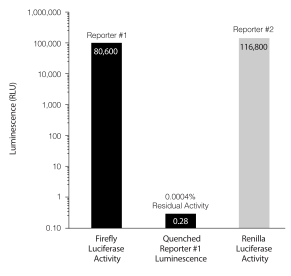
- ホタルルシフェラーゼ活性の測定: 細胞溶解液にLuciferase Assay Reagent II(LAR II)を添加。ホタルルシフェラーゼがATP、Mg²⁺、O₂の存在下で基質D-luciferinを酸化し、直ちに測定できる生物発光シグナルを生成。フラッシュ型アッセイでありながらシグナルは1分以上持続し、実験用レポーターの測定値として使用
- Renillaルシフェラーゼ活性の測定: 同じサンプルにStop & Glo® Reagentを添加。ホタルルシフェラーゼ反応を停止すると同時に、Renillaルシフェラーゼ反応を開始。RenillaルシフェラーゼがATP非依存的にcoelenterazineを酸化して2つ目の発光シグナルを生成し、補正用コントロールの測定値として使用
各サンプルについて、ホタルルシフェラーゼの発光量をRenillaルシフェラーゼの発光量で除した比率、すなわちRelative Light Unit(RLU)比または補正済みレポーター活性を算出します。この比率によって、トランスフェクション効率、細胞数、細胞溶解効率のばらつきを補正でき、ウェル間、プレート間、実験間で再現性の高いデータが得られます。
Dual-Luciferase® Assayで最適な結果を得るために、デュアルルシフェラーゼアッセイでのパフォーマンスが確認されたルミノメーターの使用を推奨しています。 このようなルミノメーターはデュアルアッセイ認定ルミノメーター"DLReady™" として表示されています。 "DLReady™ルミノメーターの詳細についてはDLReady™ Validated Luminometers をご覧ください。
pGL4 Luciferase Reporter VectorはDLR™ Assay System用として開発されており、通常、恒常的に発現するウミシイタケルシフェラーゼベクターと実験用のホタルルシフェラーゼベクターを哺乳動物細胞に共トランスフェクションして使用します。
備考:Cat.# E1960 / E1980にはPassive Lysis Buffer (1x 30ml)が添付されており、これは96ウェルプレート(20μl/ウェル使用時)で10枚分(約1,000ウェル分)に相当します。より多くのLysis Buffer を必要とするアプリケーション(例えば>100μl/ウェル)で使用する場合は、別売のPassive Lysis Bufferを別途購入する必要があります。
【日本語簡易マニュアル】Dual-Luciferase® Reporter Assay System日本語簡易マニュアル
※日本語マニュアルは英語版を翻訳したものですが、常に更新されるものではありません。最新のマニュアルについては英語版(“プロトコール”タブを参照)をご覧ください。
【Q&A】Dual-Glo™ Luciferase Assay System・Dual-Luciferase® Reporter Assay System
【ガイド】実験目的に適したルシフェラーゼシステムの選び方
【ガイド】レポータ遺伝子アッセイの標準化:整合性と統計的有意性向上のためのアプローチと検討材料
【サイテーション】ハイスループットスクリーニング研究への生物発光およびセルベースアッセイの応用例
シングルレポーターではなくデュアルルシフェラーゼを使用する理由
シングルルシフェラーゼレポーターアッセイでは、実験用コンストラクトから生じる絶対発光量のみを測定します。簡便な方法ですが、シングルレポーターのデータは、トランスフェクション効率、細胞生存率、細胞溶解の程度といったウェル間差の影響を受けます。これらは、研究対象となる生物学的変化とは関係のないばらつきです。
DLR™ Assayでは、弱い構成的プロモーターの制御下にある第2のルシフェラーゼレポーターを共トランスフェクションします。例えば、Renillaルシフェラーゼを発現するpRL-TK(カタログ番号E6921)を使用することで、それぞれのサンプルに内部標準を設けることができます。ホタルルシフェラーゼ活性をRenilla ルシフェラーゼ活性で補正することで、サンプルの分割、細胞溶解液の並行測定、別途のタンパク質定量を行うことなく、技術的なばらつきを低減できます。より詳しく知りたいかたは、Designing a Bioluminescent Reporter Assay: Normalization Optionsをご覧ください。
デュアルレポーター方式のその他の特長
- 同じ細胞溶解液のチューブまたはウェルから両レポーターを測定できる、サンプル分割不要のワークフロー
- 7桁の直線範囲と、高感度ルミノメーター使用時におけるアトモルレベルの感度による、非常に低い発現量や弱いプロモーター活性の変化の検出
- 哺乳類細胞には内在性の発光活性がないことによる、無視できる程度の低いアッセイバックグラウンド
- オートインジェクター搭載ルミノメーター使用時に、1サンプル当たり約4秒で完了する2種類の反応測定と、ハイスループットワークフローへの対応
ホタルルシフェラーゼとRenillaルシフェラーゼの主な違い
ホタルルシフェラーゼとRenillaルシフェラーゼは、構造的に関連のない酵素であり、それぞれ異なる基質、反応条件、スペクトル特性を持ちます。この直交性により、各酵素がそれぞれ固有の基質とのみ反応し、選択的に反応を停止できるため、デュアルレポーター測定が可能になります。
|
項目 |
ホタルルシフェラーゼ(Photinus pyralis) |
Renillaルシフェラーゼ(Renilla reniformis) |
|---|---|---|
|
DLR™ Assayでの役割 |
実験用レポーター |
補正用内部コントロール |
|
基質 |
D-luciferin |
Coelenterazine |
|
必要な補因子 |
ATP + Mg²⁺ + O₂ |
O₂のみ(ATP非依存性) |
|
シグナル特性 |
フラッシュタイプ(明るく、持続時間が短い) |
フラッシュタイプ(明るく、持続時間が短い) |
|
哺乳類細胞の内在性活性 |
なし |
なし |
|
推奨ベクターファミリー |
pGL4またはpGL3(ベクターの選択肢については、TM259をご覧ください) |
pRL vectors |
|
DLR™ Assayでの測定順序 |
最初に測定(LAR II Reagent) |
2番目に測定(Stop & Glo® reagent) |
注:ホタルルシフェラーゼとRenillaルシフェラーゼの測定には、それぞれ異なる基質とバッファーシステムを使用します。DLR™ Assayでは、2つの反応間の交差反応性は無視できる程度です。
プロトコル
Complete Protocol
Quick Protocols
よくあるご質問
デュアルルシフェラーゼレポーターアッセイとは何ですか?
デュアルルシフェラーゼレポーターアッセイは、同じ細胞溶解液から、通常はホタルおよびRenillaという2種類のルシフェラーゼ酵素の活性を測定する方法です。ホタルルシフェラーゼレポーターは、実験対象となる遺伝子制御を反映します。Renillaルシフェラーゼは、補正用の内部コントロールとして使用します。トランスフェクション効率、細胞数、細胞溶解のばらつきを補正できるため、シングルレポーターアッセイより正確で再現性の高い結果が得られます。
Renillaルシフェラーゼを内部コントロールとして使用する理由は何ですか?
Renillaルシフェラーゼは、ホタルルシフェラーゼのD-luciferinとは異なる基質であるcoelenterazineを使用します。このため、2つの反応は互いに干渉せず、同じサンプルから連続して測定できます。弱い構成的プロモーターでRenillaルシフェラーゼを発現させた場合、その発現量は実験条件によって変化しにくいため、サンプル間のトランスフェクション効率や細胞数を補正する基準として適しています。
ホタルルシフェラーゼアッセイでは、luciferin、ATP、O₂からどのように光が生じますか?
ホタルルシフェラーゼは、2段階の反応によって基質D-luciferinの酸化を触媒します。最初の段階では、ATPによってluciferinがアデニル化され、luciferyl-AMPが生成されます。次の段階では、分子状酸素によってluciferyl-AMPが酸化され、電子励起状態のoxyluciferinが生成されます。Oxyluciferinが基底状態へ戻る際に光子を放出します。この発光量は、広い濃度範囲にわたってルシフェラーゼ活性に比例します。
DLR™ Assayには専用のルミノメーターが必要ですか?
はい。DLR™ Assayはフラッシュ型の反応を利用するため、試薬添加からシグナル測定までのタイミングを一定に保つには、2基の試薬オートインジェクターを備えたルミノメーターが必要です。プロメガのDLReady™プログラムでは、DLR™ Assay Systemでの使用が検証されたルミノメーターを紹介しています。インジェクターを使用しないワークフローには、発光半減期が約2時間の安定したグロー型反応を採用したDual-Glo® Luciferase Assay System(カタログ番号E2920/E2940/E2980)をご検討ください。Dual-Glo® assayは、オートインジェクターを必要とせず、発光測定に対応した一般的なプレートリーダーで使用できます。96および384ウェルプレートのバッチ処理に最適化されています。
DLR™ Assayの直線的な検出範囲はどの程度ですか?
DLR™ Assayは、ホタルおよびRenillaルシフェラーゼ活性のいずれについても、7桁の範囲で直線性を示します。GloMax® Discoverのように広いダイナミックレンジを持つ高感度ルミノメーターを使用した場合、アトモル(<10⁻¹⁸ mol)レベルの感度が得られます。この広いダイナミックレンジにより、小さなシグナル変化を検出できるだけでなく、高活性サンプルでも測定前の希釈が必要になることはほとんどありません。
デュアルルシフェラーゼとシングルレポーターは、どのように使い分けますか?
サンプル間でトランスフェクション効率または細胞生存率にばらつきがある場合は、DLR™ Assayを使用してください。こうしたばらつきは、多くの細胞ベースレポーター実験で生じます。Renillaルシフェラーゼ活性で補正することで、このノイズを低減し、データの信頼性を高めることができます。
ウェル間のばらつきを低減するには、どうすればよいですか?
- 各サンプルのホタルルシフェラーゼ活性をRenillaルシフェラーゼ活性で補正
- 細胞播種密度とトランスフェクション条件の統一
- 細胞溶解および試薬添加へのマルチチャンネルピペットまたはリキッドハンドラーの使用
- すべての試薬の室温への平衡化
- 手作業による測定タイミングのばらつきを抑える、オートインジェクター搭載DLReady™ルミノメーターの使用
DLR™ Assayは無細胞系で使用できますか?
はい。DLR™ Assay Systemは、 TNT® Coupled Reticulocyte Lysate Systemsなどの無細胞転写・翻訳反応に対応しています。細胞へトランスフェクションすることなく、規定された環境で遺伝子発現とその制御を研究できます。合成生物学、ハイスループットスクリーニング、機能解析などに有用です。
内部コントロールとして使用する場合、NanoLuc®とRenillaルシフェラーゼにはどのような違いがありますか?
同じプロモーターから発現させた場合、NanoLuc®ルシフェラーゼはRenillaルシフェラーゼより最大1,000倍明るい発光を示します。Nano-Glo® Dual-Luciferase Reporter Assay System(カタログ番号 N1610)では、ペアとなるレポーターの一方にNanoLuc®ルシフェラーゼを使用します。レポーター発現量が非常に低い場合や、補正比を有効なダイナミックレンジ内に維持するために、より明るいコントロールシグナルが必要な場合に有用です。
再現性の高い結果を得るため、アッセイ条件をどのように最適化しますか?
ルシフェラーゼアッセイの性能は、測定前および測定時の複数の要因による影響を受けます。これらを系統的に管理することが、ばらつきの少ない高品質なデータを得るために重要です。
細胞密度とトランスフェクション
- 均一なコンフルエンシーを得るため、トランスフェクションの18~24時間前に一定の密度で細胞を播種し、トランスフェクション時のコンフルエンシーを約70~80%に調整
- すべての実験で同じロットのトランスフェクション試薬と、同じDNA:試薬比を使用。DLR™ Assayプロトコルで検証済みのFuGENE® HD Transfection Reagent
- 補正を行うため、一定のDNA比率でのRenillaコントロールベクター(pRL-TK、pRL-CMVなど)の使用。通常、ホタルルシフェラーゼコンストラクトに対して1:10~1:50。Renillaシグナルが直線範囲内に十分収まるよう比率を調整
細胞溶解
- 1X濃度のPassive Lysis Buffer(PLB)の使用と、希釈後の凍結融解の回避
- 96ウェルプレートの接着細胞では、1ウェル当たり20µlの1X PLBを標準使用量として使用。24ウェルプレートでは100µlなど、ウェルサイズに応じた比例増量
- 十分な細胞溶解のため、室温で15分間のプレート振とう。不完全な細胞溶解は、大きなばらつきの一般的な原因
- 直ちに測定しない場合の-70°Cでの細胞溶解液の凍結保存。DLR™ Assayは凍結した細胞溶解液に対応
測定条件
- デュアルオートインジェクターを搭載したDLReady™認証ルミノメーターの使用。注入量10~100µl、試薬添加後の遅延時間2秒、測定積算時間10秒に最適化されたアッセイ
- 使用前に試薬を室温へ平衡化。低温のLAR II Reagentによるシグナル強度の低下
- 使用直前にLAR IIおよびStop & Glo® Reagentを調製または融解し、混合済み試薬の繰り返しの凍結融解を回避
- 全ウェルで測定タイミングを統一するため、LAR II添加後5分以内のホタルルシフェラーゼ測定と、Stop & Glo®添加後30秒以内のRenillaルシフェラーゼ測定
データの補正と直線範囲
- 各サンプルについて「ホタルルシフェラーゼRLU ÷ RenillaルシフェラーゼRLU」で補正済みレポーター活性を算出し、ネガティブコントロール(空ベクターまたは溶媒処理細胞)に対する変化倍率として表示
- ホタルルシフェラーゼシグナルがルミノメーターの直線範囲を超える場合(一般に ≥10⁶ RLU)、細胞溶解液を1X PLBで10倍希釈して再測定。DLR™ Assayは7桁の直線範囲を持つため、通常の発現条件では希釈が必要になることはまれ
- Renillaコントロールシグナルが直線範囲内にあることの確認。過剰なpRLベクターDNAによるRenillaコントロールの過剰発現は、補正に使用できるダイナミックレンジを狭める可能性
- アッセイバックグラウンドを確認するDNAなしトランスフェクションコントロール(Mock)と、ロット間の一貫性を確認する既知活性のポジティブコントロールコンストラクトの使用
デュアルルシフェラーゼレポーターアッセイでは何を研究できますか?
DLR™ Assay Systemは、ライフサイエンス分野の論文で広く引用されているレポーター遺伝子解析ツールです。高感度、広い直線範囲、内部補正機能を備え、さまざまな遺伝子制御研究に利用できます。
- プロモーターおよびエンハンサー活性:推定制御配列をホタルルシフェラーゼレポーターの上流へクローニングし、刺激、変異、共発現させた転写因子に対する転写活性を定量
- シグナル伝達経路の活性化:CRE、NF-κB、AP-1、Wnt/TCFなどの経路応答性プロモーター配列をホタルルシフェラーゼの上流に配置し、特定のシグナル伝達経路を活性化または阻害する化合物や遺伝子改変をスクリーニング
- 転写因子の結合および活性:転写因子の結合配列を持つレポーターベクターと転写因子コンストラクトを共トランスフェクションし、転写活性化能を測定
- 3′ UTR制御およびmiRNA活性:ホタルルシフェラーゼコード配列の下流に3′ UTR配列を挿入し、miRNA、RNA結合タンパク質、その他のUTR配列による転写後制御を解析
- siRNAおよびshRNAの検証:標的遺伝子のプロモーターで発現させたレポーター活性、または標的遺伝子の3′ UTRに連結したレポーター活性の低下を測定し、RNA干渉コンストラクトのノックダウン効率を確認
- ウイルスプロモーターおよび複製研究:ウイルスLTRまたはプロモーターをホタルルシフェラーゼの上流へクローニングし、共トランスフェクションしたRenillaコンストラクトで補正しながら、ウイルス遺伝子発現または複製活性をモニタリング
- 無細胞転写・翻訳: in vitro転写・翻訳反応における、細胞へのトランスフェクションを必要としない規定環境下での遺伝子発現および制御の研究
製品仕様
Catalog Number:
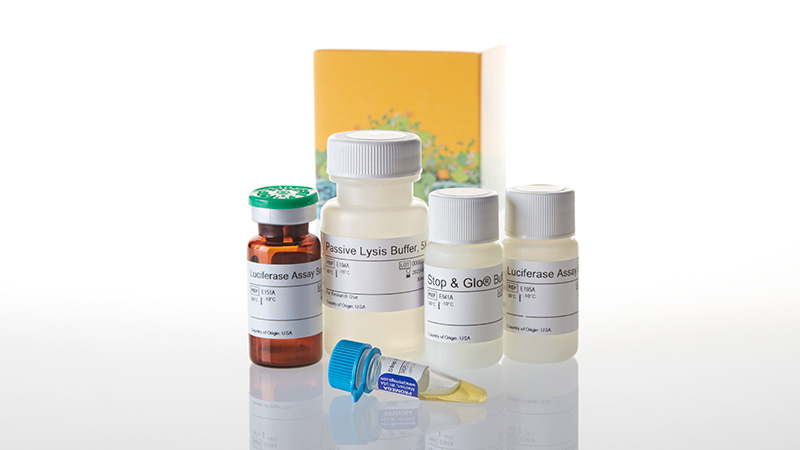
選択製品の構成品内容
| Item | Part # | Size | Available Separately |
|---|---|---|---|
|
Luciferase Assay Substrate |
E151A | 1 × 1 vial | |
|
Passive Lysis Buffer, 5X |
E194A | 1 × 30ml | View Product |
|
Luciferase Assay Buffer II |
E195A | 1 × 10ml | |
|
Stop & Glo® Substrate |
E640A | 1 × 200μl | |
|
Stop & Glo® Buffer |
E641A | 1 × 10ml |
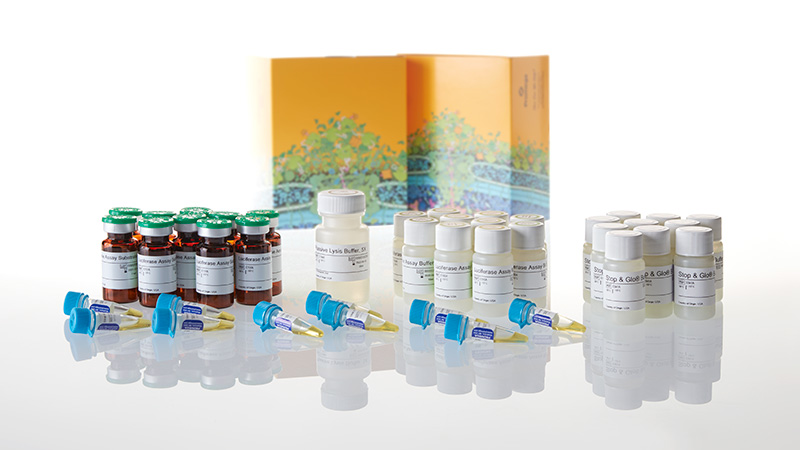
選択製品の構成品内容
| Item | Part # | Size | Available Separately |
|---|---|---|---|
|
Luciferase Assay Substrate |
E151A | 10 × 1 vial | |
|
Passive Lysis Buffer, 5X |
E194A | 1 × 30ml | View Product |
|
Luciferase Assay Buffer II |
E195A | 10 × 10ml | |
|
Stop & Glo® Substrate |
E640A | 10 × 200μl | |
|
Stop & Glo® Buffer |
E641A | 10 × 10ml |
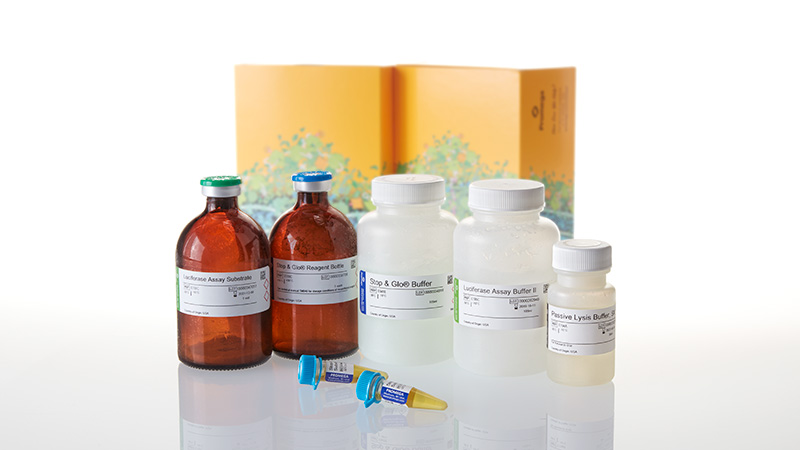
選択製品の構成品内容
| Item | Part # | Size | Available Separately |
|---|---|---|---|
|
Stop & Glo® Reagent Bottle |
E118C | 1 × 1 each | |
|
Luciferase Assay Substrate |
E151C | 1 × 1 vial | |
|
Passive Lysis Buffer, 5X |
E194A | 1 × 30ml | View Product |
|
Luciferase Assay Buffer II |
E195C | 1 × 10⁵ml | |
|
Stop & Glo® Substrate |
E640B | 2 × 1.05ml | |
|
Stop & Glo® Buffer |
E641B | 1 × 10⁵ml |
技術資料
技術記事
- Targeted zinc-finger repressors to the oncogenic HBZ gene inhibit adult T-cell leukemia (ATL) proliferation
- ACLY as a modulator of liver cell functions and its role in Metabolic Dysfunction-Associated Steatohepatitis
- Gene therapy with AR isoform 2 rescues spinal and bulbar muscular atrophy phenotype by modulating AR transcriptional activity
関連製品
類似製品
Nano-Glo® Dual-Luciferase Reporter Assay System
シングルサンプル中のホタルおよび NanoLuc® ルシフェラーゼ活性を高感度に検出
N1610, N1620, N1630, N1650, N1521, N1531, N1541, N1551
Nano-Glo® Luciferase Assay System
NanoLuc® Luciferaseのための、添加・混和・測定アッセイ、ほとんどの実験でシグナル半減期2時間以上
N1110, N1120, N1130, N1150
Dual-Glo® Luciferase Assay System
単一サンプルでのホタル、ウミシイタケルシフェラーゼ活性の連続測定、シグナル半減期2時間。インジェクター不要。
E2920, E2940, E2980
Bright-Glo™ Luciferase Assay System
ロボットを用いた連続処理にも使える高感度レポーターアッセイ
E2610, E2620, E2650