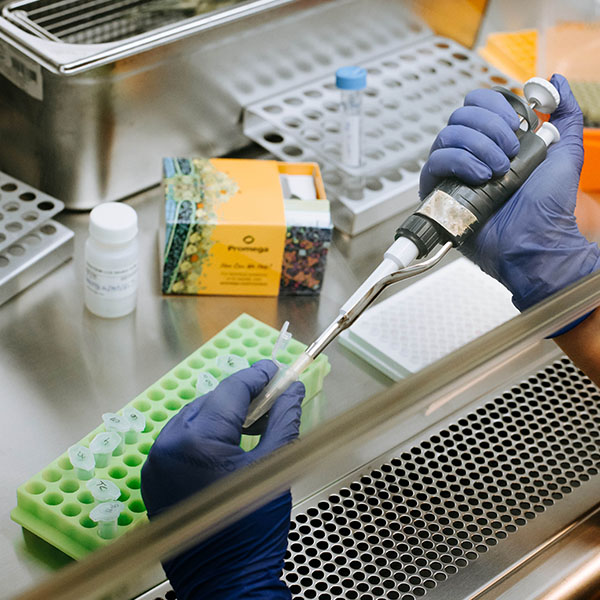
CellTiter-Glo® 3D Cell Viability Assay
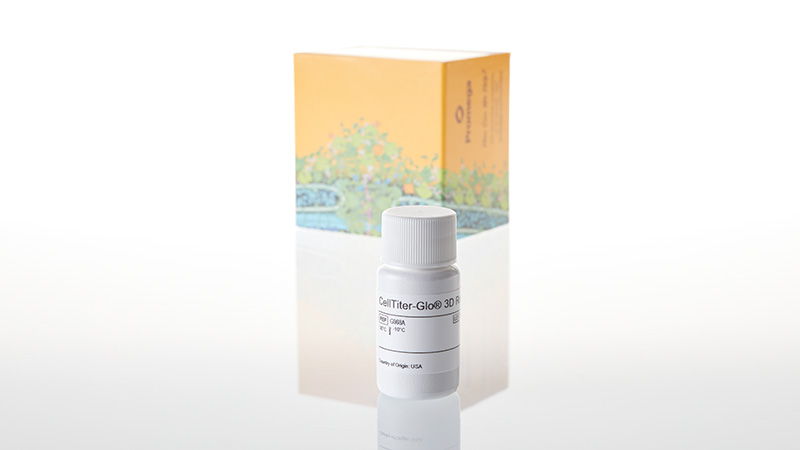
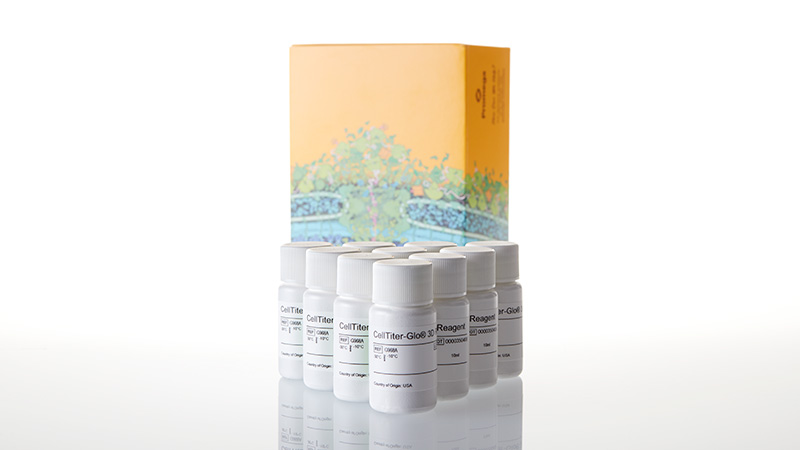
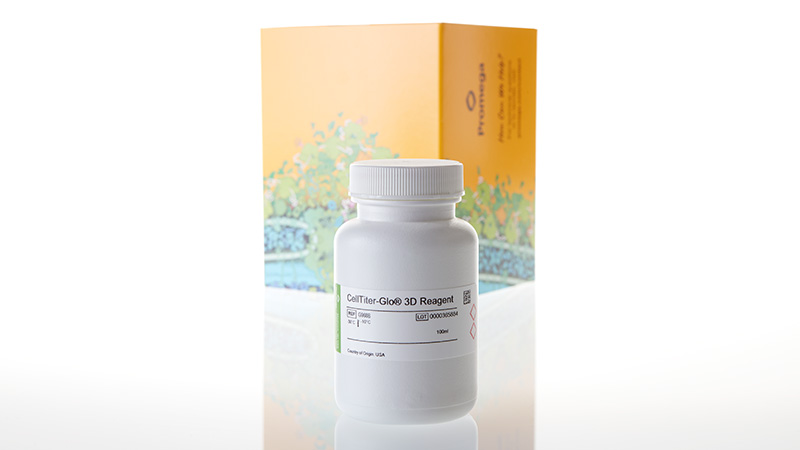

3Dマイクロティッシュ培養用に検証された細胞生存性アッセイ
- 不完全な細胞溶解によって一般的な細胞生存性アッセイの性能が低下しやすい、3D細胞培養モデル専用の試薬組成
- そのまま使える単一試薬による、シンプルな30分間のプロトコル
- ハイスループット3D創薬スクリーニングに適した優れたアッセイ精度
Catalog Number:
Size
Catalog Number: G9681
Catalog Number: G9682
Catalog Number: G9683
CellTiter-Glo® 3D Cell Viability Assayとは?測定原理は?
CellTiter-Glo® 3D Assayは、腫瘍スフェロイド、オルガノイド、Matrigel®などの細胞外マトリックス足場に包埋された細胞など、3次元細胞培養モデル専用に設計されたホモジニアスな発光式細胞生存性アッセイです。従来のCellTiter-Glo® Assayと同じ、実績あるルシフェラーゼベースの反応を用いて、代謝活性を持つ細胞の直接的な指標であるアデノシン三リン酸(ATP)を定量します。3D培養の緻密な多層構造へ浸透し、十分に溶解できるよう設計された、溶解力の高いバッファーを採用しています。
そのまま使える単一試薬を使用し、30分で結果が得られます。グロー型発光シグナルは5時間以上安定しているため、ハイスループット環境でも柔軟にプレートを処理できます。
MO:BOTシステム上でCellTiter-Glo® 3D Cell Viability Assayを使用する自動3D培養ワークフローは、3Dスフェロイドやオルガノイドの細胞生存率を評価するための堅牢なソリューションとなります。
ケーススタディ
課題
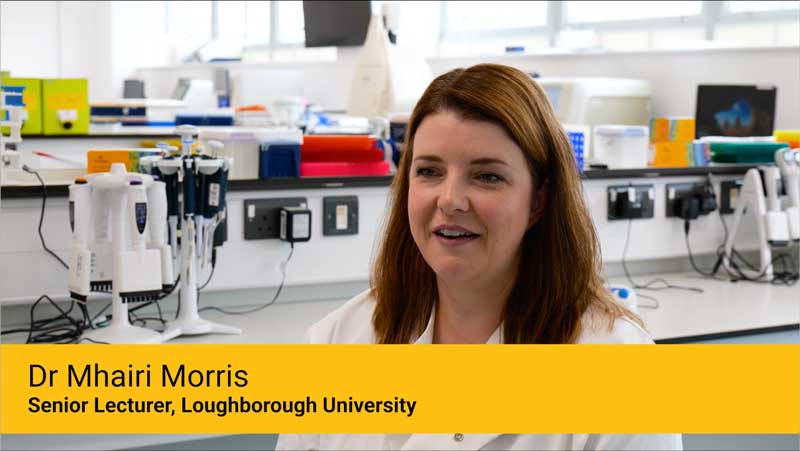
ラフバラー大学のSenior LecturerであるMhairi Morris博士は、脂肪細胞とがんの関係を研究しています。3D環境における細胞間相互作用をモデル化するために、MTTアッセイよりもばらつきの少ない方法を必要としていました。
結果
CellTiter-Glo® 3D Assayを使用することで、2Dモデルから3Dモデルへ移行し、内臓脂肪および皮下脂肪とがん細胞との相互作用を、より正確に評価できるようになりました。
3D環境は生体内の状態をより適切に反映し、本アッセイは生細胞から放出されたATPを測定するため、結果のばらつきも低減しました。また、シンプルなプロトコルによって時間と労力を削減し、その分を研究に充てることができました。
従来のCellTiter-Glo® Assayと比べてATP回収量はどの程度向上しますか?
4種類のサイズのスフェロイドでATP回収量を直接測定した結果、スフェロイド径が大きくなるほど、CellTiter-Glo® 3D Assayの優位性が高まることが示されました。スフェロイドが大きく緻密になるほど、従来のCellTiter-Glo® AssayではATP量が実際よりも低く測定されます。
| スフェロイド径(µm) | 従来のCellTiter-Glo® Assay(pmol/マイクロティッシュ) | CellTiter-Glo® 3D Assay(pmol/マイクロティッシュ) | 回収比(3D:従来品) |
|---|---|---|---|
| 188 | 16 ± 4 | 17 ± 4 | 1.10 |
| 386 | 79 ± 3 | 94 ± 11 | 1.19 |
| 459 | 103 ± 2 | 126 ± 11 | 1.22 |
| 565 | 127 ± 3 | 178 ± 17 | 1.40 |
他の細胞生存率アッセイと比べた感度
CellTiter-Glo® 3D Assayは、3Dマイクロティッシュモデルにおいて、バックグラウンドを数桁上回る発光シグナルを生成します。蛍光法や比色法と比べて、シグナルとバックグラウンドの差が大幅に大きくなります。直径約250µmのInSphero Insight™ヒト肝マイクロティッシュを用いた直接比較では、alamarBlue®およびMTTのシグナルは細胞なしコントロールをわずかに上回る程度でした。一方、CellTiter-Glo® 3D Assayでは、強く明瞭なシグナルが得られました。測定時間も、alamarBlue®の3時間、MTTの8時間に対し、CellTiter-Glo® 3D Assayは30分です。
| アッセイ | 検出法 | 総アッセイ時間 | 細胞なしバックグラウンドに対するシグナル |
|---|---|---|---|
| CellTiter-Glo® 3D | ATP発光(ルシフェラーゼ反応) | 30 分 | バックグラウンドを数桁上回る |
| alamarBlue®/レサズリン | 蛍光(酸化還元反応) | 3 時間 | バックグラウンドをわずかに上回る |
| MTT | 吸光度(比色法) | 8 時間 | バックグラウンドをわずかに上回る |
比較データ: InSphero Insight™ヒト肝マイクロティッシュ(直径約250µm)、およびInSphero GravityPLUS™ 96ウェル・ハンギングドロッププラットフォームにHCT116ヒト結腸がん細胞を播種して作製した直径約340µmのスフェロイド。すべてのマイクロティッシュは各メーカーのプロトコルに従って測定した。
3Dモデルにおいて、ATPベースの発光法が比色法や蛍光法より高感度である理由は、2つの利点が組み合わさるためです。ルシフェラーゼベースのアッセイでは、ATPを高いシグナル増幅率で直接検出します。また、CellTiter-Glo® 3Dの溶解力の高いバッファーにより、スフェロイド全体からATPを効率よく回収できます。
alamarBlue®などの蛍光アッセイは代謝還元速度に依存します。低酸素かつ栄養が制限される3Dスフェロイド内部では、この速度が低下するため、正確な測定が特に重要なモデルでシグナルがさらに低下します。
他の溶解式ATP測定アッセイとの比較
3Dマイクロティッシュへの優れた浸透性による、より正確な細胞生存性測定
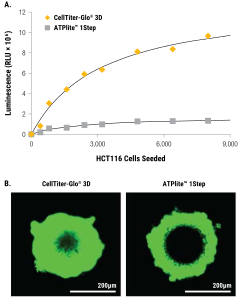
InSphero GravityPLUS™ 96ウェル・ハンギングドロッププラットフォームにHCT116ヒト結腸がん細胞を播種し、4日間培養してスフェロイドを形成した。
パネルA すべてのサンプルに同量の試薬を添加し、5分間振とうした後、30分後に発光を測定した。
パネルB 細胞溶解の指標として、サンプルへの添加前にCellTiter-Glo® 3D Reagent(左)またはATPlite™ 1Step Reagent(右)へ2倍濃度のCellTox™ Green Dyeを添加し、30分後に画像を取得した。パネルBのスフェロイドは直径約300µmで、各画像のスケールバーは200µmを示す。
ハイスループット創薬スクリーニングへの適合性
CellTiter-Glo® 3D Assayは、ハイスループット3D創薬スクリーニングで検証済みです。HTSの品質基準を満たすアッセイ精度が確認されています。
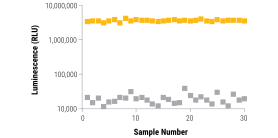
3DスフェロイドにおけるZ′ファクター
96ウェルInSphero GravityPLUS™ハンギングドロッププレートの60ウェルに、HCT116ヒト結腸がん細胞を各400細胞播種し、4日間培養して直径約350µmのスフェロイドを60個形成した。半数を100µM Panobinostat(グレーの四角)、残り半数を溶媒コントロール(1% DMSO、オレンジ色の四角)で処理した。48時間後、CellTiter-Glo® 3D Reagentを用いてすべてのサンプルを測定した。CellTiter-Glo® 3D AssayのZ′ファクターは0.81であった。
対応する3D培養フォーマット
CellTiter-Glo® 3D Assayは、広く使用されている次の3種類の3D培養フォーマットで検証されており、いずれも同等の用量反応結果が得られています。
- ハンギングドロップ培養
- 超低接着(ULA)プレート培養
- Matrigel® 3D培養
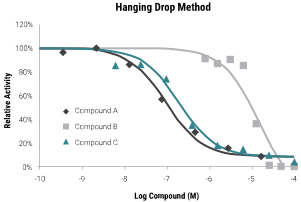
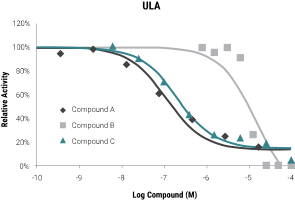
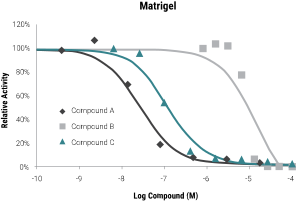
HCT116ヒト結腸がん細胞を、ハンギングドロップには400細胞、ULAまたはMatrigel®には1,000細胞播種した。マイクロティッシュを4日間培養し、化合物で48時間処理した後、CellTiter-Glo® 3D Reagentを用いて測定した。発光は試薬添加30分後に測定した。
New Approach Methodologies(NAMs)では、複雑なモデルの再現性、長期的な追跡、標準化について、FDAによる明確なバリデーション要件が設けられています。スフェロイド、オルガノイド、Organ-on-a-Chipを用いたワークフローでは、使用するすべてのアッセイがこれらの要件に関係します。プロメガは20年以上にわたり、こうした課題に対応し、NAMs研究の要件を満たす生物発光アッセイを開発してきました。
3D培養の生物学的評価に役立つツール
3D培養モデルを使用する場合、適切なアッセイシステムを選択することが重要です。3D培養における生物学的変化をモニタリングするためのツールをご紹介します。
プロトコル
Complete Protocol
Quick Protocols
よくあるご質問
CellTiter-Glo® 3D Assayと従来のCellTiter-Glo® Assayとの違いは何ですか?
以下の表では、Promegaの社内試験で検証された性能データに基づき、2D単層培養用のCellTiter-Glo® AssayとCellTiter-Glo® 3D Assayの主な違いをまとめています。
| 項目 | Standard CellTiter-Glo® Assays (2D) | CellTiter-Glo® 3D Assay |
|---|---|---|
| 培養モデル | 単層培養(接着細胞または浮遊細胞) | スフェロイド、オルガノイド、3Dマトリックス培養 |
| 試薬形態 | 2コンポーネント(従来品)またはそのまま使える試薬(2.0) | 溶解力の高いバッファーを含む、そのまま使える単一試薬 |
| 溶解機構 | 標準的な界面活性剤による溶解。単層培養に有効 | 緻密な3D構造への浸透が検証された、溶解力の高いバッファー |
| ATP回収量(大型スフェロイド) | 実際より低く測定 | より高い回収量 |
| インキュベーション時間 | 10分 | 30分 |
| 感度 | 高感度な発光測定 | 高感度な発光測定 |
| 3D培養フォーマットへの対応 | 3D用として未検証 | ハンギングドロップ、ULAプレート、Matrigel®で検証済み。3方式で同等の結果 |
| HTSへの対応 | 96/384/1536ウェルフォーマット | 96および384ウェルULAフォーマットで検証済み |
3D培養の細胞生存率を測定する代表的な方法は何ですか?
3D培養の細胞生存率測定には複数のアッセイを使用できます。それぞれ、感度、処理能力、空間分解能、測定時間の面で異なる長所と制約があります。
| 測定法 | 原理 | 主な長所 | 主な制約 |
|---|---|---|---|
| ATP発光(CellTiter-Glo® 3D) | 溶解力を高めた処理後、ルシフェラーゼ反応で細胞内ATPを定量 | 最高レベルの感度、30分間のプロトコル、3D HTSでZ′=0.81、HTS対応 | 破壊的なエンドポイント測定、空間情報なし |
| Live/dead蛍光染色(Calcein-AM/EthD-1) | 膜透過性色素で生細胞、排除色素で死細胞を染色 | 細胞生存状態の空間的な可視化、非破壊的な測定も可能 | イメージングが必要、大型スフェロイドでは焦点深度に制限 |
| 代謝活性/比色法(MTT、alamarBlue®) | 代謝反応によって有色または蛍光性生成物へ還元 | 非破壊的測定(レサズリン)、低コスト | 測定に3~8時間、3Dではバックグラウンドをわずかに上回る程度のシグナル、緻密なスフェロイドへの浸透性が低い |
| フローサイトメトリー | スフェロイドを解離した後の1細胞解析 | 高分解能、マルチパラメーター解析 | 解離が必要、空間情報の消失、低い処理能力 |
| 共焦点/ライトシートイメージング | 3次元空間蛍光顕微鏡法 | 3D空間情報および経時的な細胞生存率データ | 高額な装置、複雑な解析、低い処理能力 |
CellTiter-Glo® AssayまたはCellTiter-Glo® 2.0を3D細胞培養に使用できますか?
一般的なCellTiter-Glo® Assayは、細胞溶解が不十分になるため、緻密な3Dスフェロイドには推奨されません。3Dモデル専用に最適化されたCellTiter-Glo® 3D Cell Viability Assayをご使用ください。
他の3D細胞生存率アッセイと比べて感度はどの程度ですか?
CellTiter-Glo® 3D Assayは、他の発光アッセイと同様にバックグラウンドが非常に低く、通常、数十倍から数千倍のシグナル/バックグラウンド比が得られます。これに対し、蛍光または吸光度ベースの細胞生存率アッセイでは、多くの場合、バックグラウンドの数倍程度のシグナルしか得られません。
ハイスループット3DスクリーニングにおけるZ′ファクターはいくつですか?
直径約350µmのHCT116ヒト結腸がんスフェロイドを用いた96ウェル3D精度評価試験で、CellTiter-Glo® 3D Assayは0.81のZ′ファクターを達成しました。30個のスフェロイドを100µM Panobinostat(ポジティブコントロール)、別の30個を溶媒(ネガティブコントロール)で処理しました。一般に、0.5を超えるZ′ファクターがHTSの基準とされます。0.81という値は、アッセイウィンドウが非常に明確に分離されていることを示し、ハイスループット3D創薬スクリーニングへの適合性を裏付けています。
対応する3D培養フォーマットは何ですか?
次の3種類の主要な3D培養フォーマットで検証されており、いずれも同等の用量反応結果が得られています。
- ハンギングドロップ培養(InSphero GravityPLUS™プラットフォーム)
- 超低接着(ULA)丸底プレート
- Matrigel® 3D培養
すべてのフォーマットでHCT116ヒト結腸がん細胞を4日間培養し、化合物で48時間処理してから測定しました。
従来のアッセイとプロトコルに違いはありますか?
はい。3D培養では、次の3点を変更する必要があります。
- 従来法と同様に培養液と1:1の容量比で試薬を添加し、2分間ではなく5分間、より強く混和
- 溶解力の高いバッファーを3D構造全体へ浸透させるため、10分間ではなく25~60分間インキュベーション
- 添加前にプレートと試薬の両方を室温で30分間平衡化
標準的なサイズのスフェロイドでは、試薬添加から測定までの総アッセイ時間は30分です。
3D細胞生存率測定には、ほかにどのような方法がありますか?
代替法には、次のものがあります。
- イメージングによって細胞生存状態を空間的に可視化する蛍光Live/Dead染色(Calcein-AM/EthD-1など)
- 3Dでは感度が低く、3時間のプロトコルを必要とするものの、非破壊的に測定できるレサズリンベースのアッセイ(alamarBlue®)
- 一般的な溶解反応を使用するATPlite™ 1Step(PerkinElmer)。緻密なスフェロイドでは、CellTiter-Glo® 3D Assayより浸透性とATP回収量が低下
3Dモデルで経時的に測定する場合は、非溶解式のRealTime-Glo™ MT Assayを利用できます。ただし、使用する3Dモデルごとに実験的な検証が必要です。
同じ化合物を測定した場合、3Dと2Dの細胞生存率データはどのように異なりますか?
同じ化合物でも、3Dスフェロイドから得られるIC₅₀値は、一般に2D単層培養より高くなります。これは、3Dモデルが薬剤を取り巻く生理学的環境をより適切に再現しているためです。スフェロイド内部の静止期細胞は抗増殖剤の影響を受けにくく、拡散障壁によって薬剤の内層への浸透も制限されます。このため、3DモデルのIC₅₀値はin vivoでの活性をより適切に予測できる可能性があります。2Dモデルとの差はアッセイ上の誤差ではなく、生物学的に意味のある特性です。
2Dモデルと3Dモデルで薬剤応答が異なるのはなぜですか?
3D腫瘍スフェロイドは、単層培養よりもin vivoの腫瘍微小環境を適切に再現します。酸素や栄養の濃度勾配、細胞間および細胞–マトリックス間の相互作用、大型スフェロイド内部における低酸素コアの形成などが再現されます。こうした生物学的特性により、薬剤応答は2Dデータと異なる場合があります。一般に3DモデルではIC₅₀値が高く、見かけ上の薬効が低くなります。また、分裂中の細胞を標的とする化合物や、組織内への効率的な浸透を必要とする化合物は、2Dモデルで活性を示しても、3Dモデルでは活性が低下することがあります。これは3Dモデルの特長であり、得られるデータはin vivoにおける化合物活性をより適切に予測できる可能性があります。
推奨されるプレートと測定条件は何ですか?
測定には、白色不透明プレートが適しています。必要に応じて透明なU底低接着プレートでスフェロイドを培養し、測定時に溶解液を白色不透明プレートへ移してください。シグナルを最大化してウェル間のクロストークを抑えるには、トップリーディング方式で蛍光フィルターを使用せず、ルミノメーターで測定します。一般的な発光測定条件を使用できます。シグナルは安定しているため、バックグラウンドに対して最適なシグナルが得られる条件を検討できます。
3D培養の細胞溶解と振とう条件は、どのように最適化しますか?
液がこぼれない範囲で強く振とうしてください。まずは約450rpmから開始し、シグナルがプラトーに達するまで混和時間またはインキュベーション時間を延長します。大型または高密度の3Dサンプルでは、テクニカルマニュアルTM412の記載に従ってATP回収試験を行ってください。
組織や3D以外のサンプルにも使用できますか?
細胞ペレットおよび浮遊細胞に使用できます。Promega以外の研究者による小さな組織片への使用例もありますが、これらの用途は十分に検証されていません。大型スフェロイド、組織、コラーゲンなどの複雑なマトリックスでは、サンプルごとの最適化が必要であり、適さない場合もあります。テクニカルマニュアルlTM412の記載に従ってATP回収試験を行ってください。
CellTiter-Glo® 3D Assayにはどのような制約がありますか?
- 大型マイクロティッシュへの浸透性: マイクロティッシュが大きくなるほど、試薬の浸透性とATP回収率が低下。直径約350µm以下の小型から中型のスフェロイドでは良好な浸透性と回収率を示す一方、直径350µmを超える大型または高密度スフェロイドでは、インキュベーション時間の延長や追加のボルテックス操作が必要となる可能性
- 破壊的なエンドポイント測定: 細胞を溶解するため、キネティック測定は不可。3Dモデルで細胞生存率を連続的にリアルタイム測定する場合は、モデルごとにRealTime-Glo™ MT Assayの検証が必要
- 空間的な細胞生存情報を取得できない点: スフェロイド全体の生細胞由来ATP量は測定可能だが、壊死性コアと生存細胞層の分布は評価不可。作用機序の解釈に空間情報が必要な場合は、Live/Dead蛍光イメージングとの併用を推奨
- マトリックスによる干渉: 高濃度のMatrigel®やその他のハイドロゲルマトリックスによって、試薬の浸透が妨げられる可能性。マトリックスのみのコントロールを用いたバックグラウンドATPの確認と、マトリックスを使用しないフォーマットと同等の溶解効率の確認
- ルシフェラーゼ阻害化合物: 化合物ライブラリーに含まれる一部の化合物がルシフェラーゼ活性を直接阻害し、細胞毒性の偽陽性シグナルを生じる可能性。化合物による干渉が疑われる場合は、試験最高濃度でのルシフェラーゼカウンターアッセイまたはATP添加試験を推奨
製品仕様
Catalog Number:
選択製品の構成品内容
| Item | Part # | Size |
|---|---|---|
CellTiter-Glo® 3D Reagent |
G968A | 1 × 10ml |
選択製品の構成品内容
| Item | Part # | Size |
|---|---|---|
CellTiter-Glo® 3D Reagent |
G968A | 10 × 10ml |
選択製品の構成品内容
| Item | Part # | Size |
|---|---|---|
CellTiter-Glo® 3D Reagent |
G968B | 1 × 100ml |
関連製品
類似製品
CellTiter-Glo® 2.0 Cell Viability Assay
試薬の安定性が向上したCellTiter-Glo®、ATP検出に基づく細胞増殖の定量が可能
G9241, G9242, G9243
CellTox™ Green Cytotoxicity Assay
細胞死に伴う細胞膜破壊により細胞毒性を蛍光で測定
G8741, G8742, G8743, G8731
Caspase-Glo® 3/7 3D Assay
3D培養中のカスパーゼ-3/7活性を測定するシンプルな発光アッセイ
G8981, G8982, G8983
GSH/GSSG-Glo™ Assay
培養細胞中の総グルタチオン(GSH +GSSG)、GSSG または GSH/GSSG 比を測定するための発光アッセイ
V6611, V6612
技術資料
技術記事
- Reproducible Drug Screening Assays Using Single Organoids
- Verifying Cell-Based Assays for Use with 3D Models
- Luminescent Viability Assays for Magnetically Bioprinted Hepatocyte Spheroids
- App Note: Predicting gastrointestinal toxicity
- Enhanced extrinsic apoptosis of therapy-induced senescent cancer cells using a death receptor 5 (DR5) selective agonist
- Lipidomics profiling reveals differential alterations after FAS inhibition in 3D colon cancer cell culture models
- ALDOC- and ENO2- driven glucose metabolism sustains 3D tumor spheroids growth regardless of nutrient environmental conditions: A multi-omics analysis
- High-pressure oxygen rewires glucose metabolism of patient-derived glioblastoma cells and fuels inflammasome response
- Delivery of a BET protein degrader via a CEACAM6-targeted antibody–drug conjugate inhibits tumour growth in pancreatic cancer models