Mitochondrial ToxGlo™ Assay
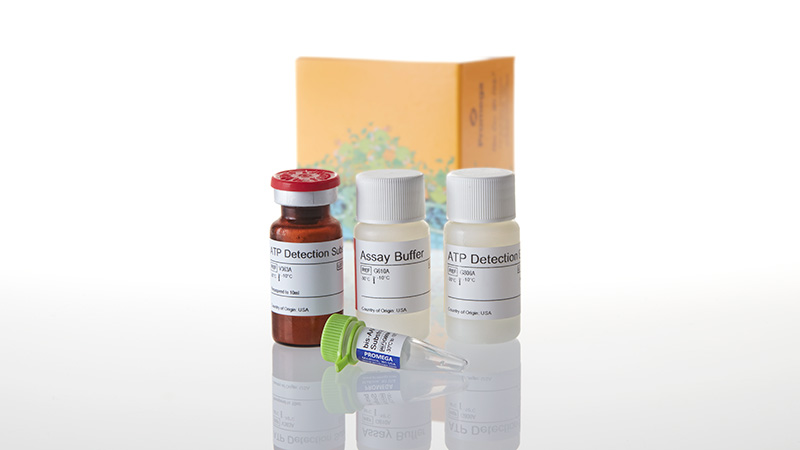
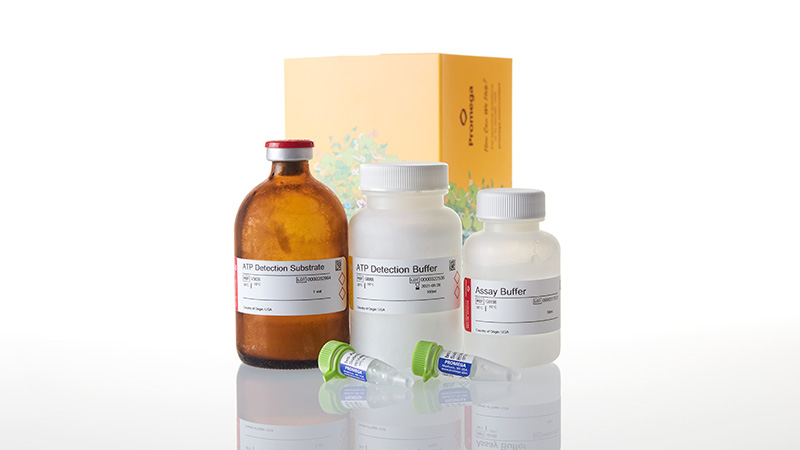
A Cell-Based Method for Predicting Potential Mitochondrial Dysfunction
- Distinguish primary mitochondrial dysfunction from secondary cytotoxic events
- Predictive for mitochondrial toxicities
- Fast, cost-effective and easy to implement

Catalog Number:
Size
Catalog Number: G8000
Catalog Number: G8001
Predictive Data to Distinguish Mitochondrial Dysfunction
哺乳動物細胞はミトコンドリア依存的(酸化的リン酸化)およびミトコンドリア非依存的(解糖)にATPを産生します。ミトコンドリアの応答を最適化するために細胞培養条件を改良する必要があるかもしれません。グルコース添加培地をガラクトース添加培地に変更することにより細胞内の酸素消費が増加し、ミトコンドリアに対する毒物への感受性が増大すると考えられます。
- 2次的な細胞毒性と1次的ミトコンドリア機能障害を分離検出:同じサンプルウェル内でATP(ミトコンドリア機能性マーカー)と死細胞プロテアーゼ(細胞膜障害マーカー)をマルチアッセイすることで、2次的な細胞毒性と1次的なミトコンドリアへの毒性を分けて調べることができる
- ミトコンドリア毒性の予測:ミトコンドリア毒性と一致したプロファイルが得られ、それ以外の細胞死メカニズムを識別可能
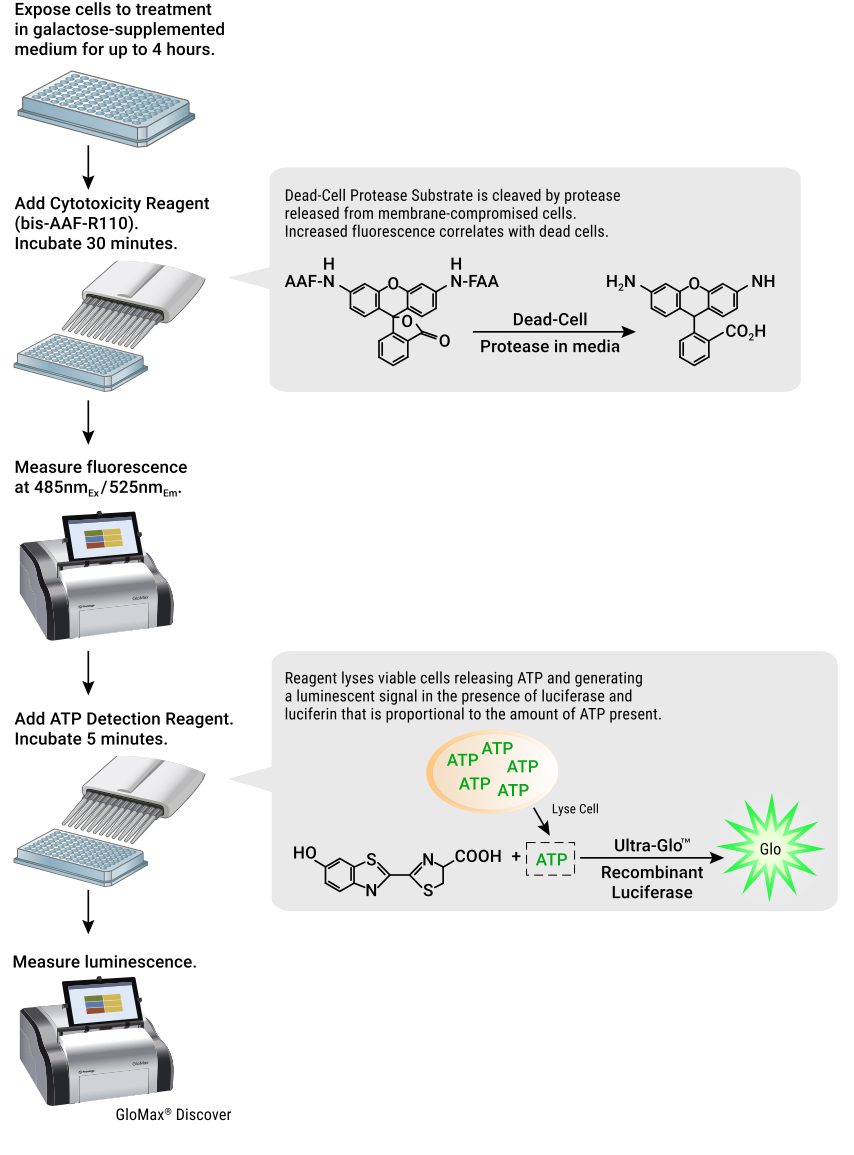
- 容易な操作:シンプルな“添加-混和-測定”だけの測定形式
- 迅速:1時間たらずで潜在的なミトコンドリア障害性を迅速に評価
- 優れたコストパフォーマンス:標準的なマルチモード検出装置で培養プレートから直接アッセイ可能
- 容易な自動化:試薬添加量はサンプル処理量に合わせて変更でき、96または384ウェルプレート形式の自動化が可能
- 化合物ライブラリーや薬剤修飾のミトコンドリア毒性プロファイリング
- Niles, A.L. et al. (2007) A homogeneous assay to measure live and dead cells in the same sample by detecting different protease biomarkers. Anal Biochem. 366, 197-206.
- Marroquin, L.D. et al. (2007) Circumventing the Crabtree effect: Replacing media glucose with galactose increases susceptibility of HepG2 cells to mitochondrial toxicants. Toxicol. Sci 97, 539-47.
- Rossignol, R. et al. (2004) Energy substrate modulates mitochondrial structure and oxidative capacity in cancer cells. Cancer Res. 64, 985-93.
Mitochondrial Responsiveness to a Model Toxin in the Presence of Galactose or Glucose
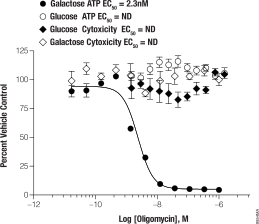
Some cells treated in the presence of glucose may preferentially rely on glycolysis to meet bioenergetic needs and are therefore relatively unresponsive to mitochondrial toxins (Glucose ATP). Cells treated in the presence of galactose must use oxidative phosphorylation to generate ATP and are therefore more responsive to mitochondrial perturbation (Galactose ATP). Oligomycin treatment did not cause changes in membrane integrity in either formulation of medium (Galactose Cytotoxicity and Glucose Cytotoxicity). Shown are data from K562 cells at 10,000 cells/well in a white Costar® 96-well plate. The cells were exposed to oligomycin for 2 hours.
Mitochondrial ToxGlo™ Assay produces profiles that are consistent with mitochondrial toxicity and discernible from other non-mitotoxic mechanisms of cell death. The assay is easy to implement as it uses a simple sequential “add-mix-read” format, and assays are performed directly in cell culture plates using standard multimode detection instrumentation.
A flexible and easily automated assay, the volume of reagent addition can be scaled to meet throughput needs; the assay is amenable to automation in 96- and 384-well plates.
Representative Profiles of Mitochondrial Toxicity
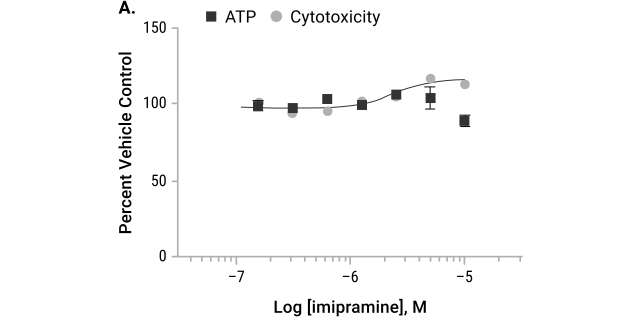
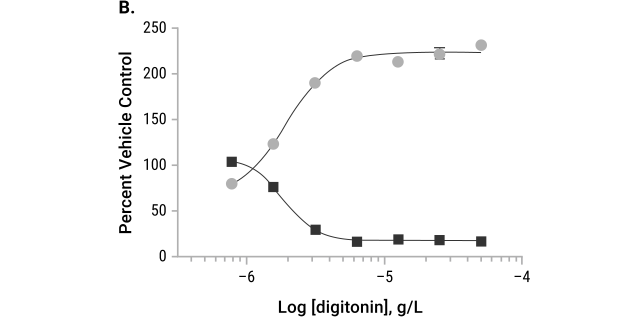
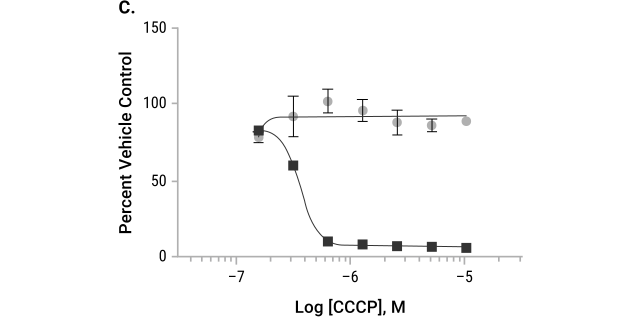
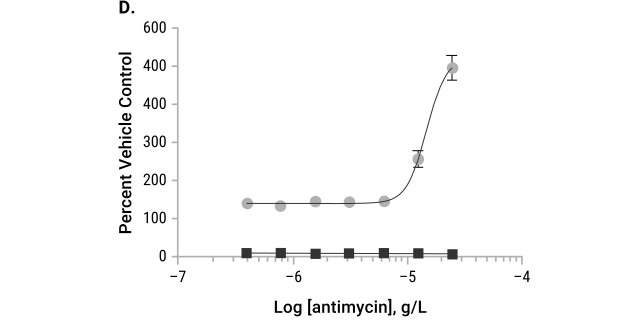
K562 cells were plated at 10,000 cells/well in white 96-well plates (Costar®) and treated with serial dilutions of compounds resuspended in glucose-free (galactose-supplemented) RPMI 1640 media for 2 hours. Panel A. No changes in ATP or membrane integrity (MI) are detected, which indicates that the compound is not a mitochondrial toxin. Panel B. The reduction in ATP with commensurate MI changes indicate that the compound is not a mitochondrial toxin; instead primary necrosis is taking place. Panel C. The reduction in ATP with no changes in MI indicates that the compound is a mitochondrial toxin. Panel D. The reduction in ATP with discordant changes in MI indicate that the compound is a mitochondrial toxin.
Simple, "Add-Mix-Measure" Protocol
"Add-mix-measure" protocol is fast and easy to implement. No parallel processing in glucose-containing medium.
Protocols
Complete Protocol
Specifications
Catalog Number:
選択製品の構成品内容
| Item | Part # | Size |
|---|---|---|
|
bis-AAF-R110 Substrate |
G609A | 1 × 10μl |
|
Assay Buffer |
G610A | 1 × 10ml |
|
ATP Detection Buffer |
G806A | 1 × 10ml |
|
ATP Detection Substrate |
V363A | 1 × 1 vial |
選択製品の構成品内容
| Item | Part # | Size |
|---|---|---|
|
bis-AAF-R110 Substrate |
G609B | 2 × 50μl |
|
Assay Buffer |
G610B | 1 × 50ml |
|
ATP Detection Buffer |
G806B | 1 × 100ml |
|
ATP Detection Substrate |
V363B | 1 × 1 vial |
Related Products
類似製品
関連製品
CellTiter-Glo® Luminescent Cell Viability Assay
ATP定量に基づく培養細胞の生存数測定
G7570, G7571, G7572, G7573
CytoTox-Fluor™ Cytotoxicity Assay
培養中の死細胞数を測定する蛍光アッセイ
G9260, G9261, G9262
MultiTox-Fluor Multiplex Cytotoxicity Assay
同じサンプルウエル内で生細胞および死細胞を測定する1液タイプの蛍光アッセイ
G9200, G9201, G9202
GloMax® Discover System
発光・蛍光・吸光度測定に対応した高性能マイクロプレートリーダー
GM3000