FAO-Glo™ Fatty Acid Oxidation Assay

Rapid, Direct Measurement of Fatty Acid Oxidation (FAO)
- Direct detection of FAO activity, no surrogate markers
- Simple, plate-based protocol gives results in ~2 hours
- Reproducible results for confident decision making
- Amenable to high-throughput screening

Catalog Number:
Size
Catalog Number: CS3271A08
A Better Way to Measure FAO in Live Cells
Fatty acid oxidation, also known as beta-oxidation, is the metabolic process by which fatty acids are broken down in the mitochondria to generate energy. This process produces NADH and FADH2, which feed into the electron transport chain to drive ATP synthesis. FAO plays a critical role in cellular energy metabolism, especially during periods of fasting, exercise or metabolic stress, and is tightly linked to mitochondrial health and function. Understanding and measuring FAO is essential for studying metabolic diseases, obesity, diabetes and cancer.
Existing approaches to FAO measurement are either indirect, low throughput, or require specialized equipment. In contrast, the FAO-Glo™ Assay offers direct detection of FAO in a simple, plate-based format:
- No radioactivity
- No oxygen consumption proxies
- No expensive instrumentation.
It combines true functional analysis with scalability and speed for modern metabolism research.
How the FAO-Glo™ Assay Works
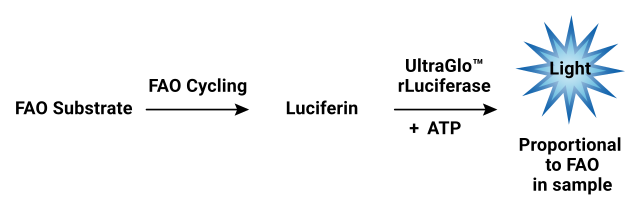
The FAO-Glo™ assay uses a proprietary FAO substrate that enters the mitochondria of live cells and undergoes fatty acid oxidation. During this process, FAO cycling triggers the release of luciferin, which is then quantified using a sensitive Luciferin Detection Reagent. Luminescence produced is proportionate to FAO occurring in the sample.
Reliable FAO Measurement from Low to High Cell Inputs
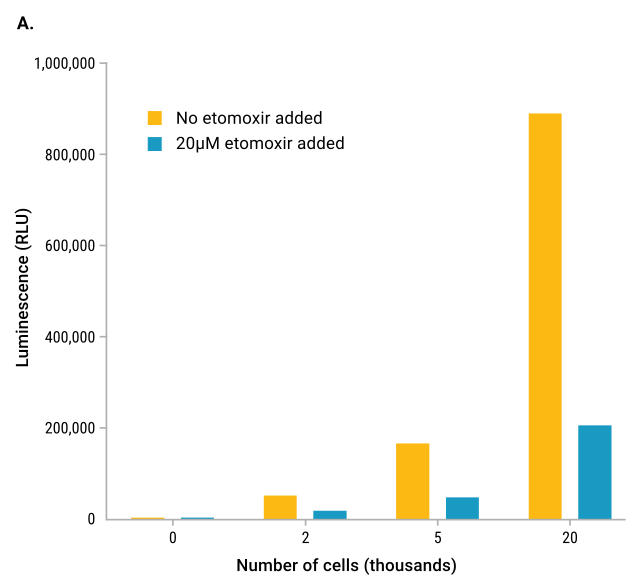
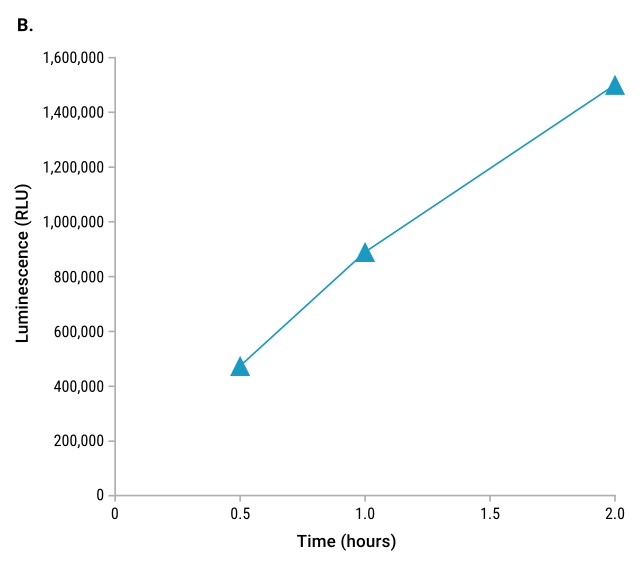
Cell number and time dependence of FAO. FAO-Glo™ was used to measure FAO in HEK293 cells for 1 hour with different amounts of cells in the presence or absence of 20mM etomoxir (A) or with 20K cells for different amounts of time (B).
Measuring FAO Inhibition and Activation
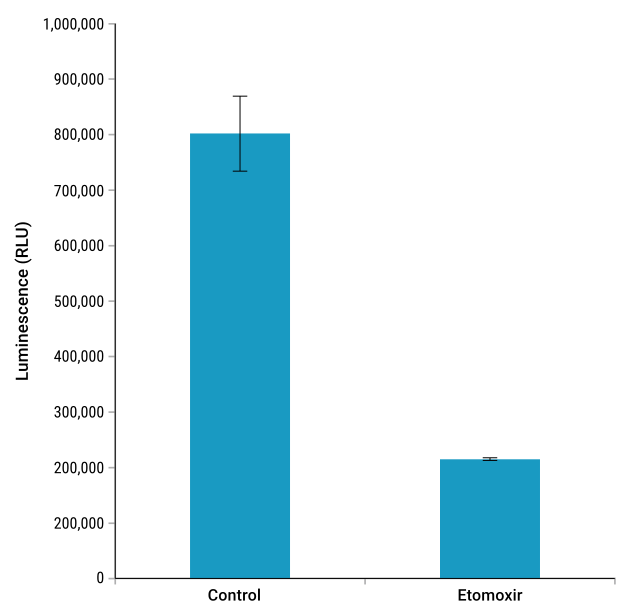
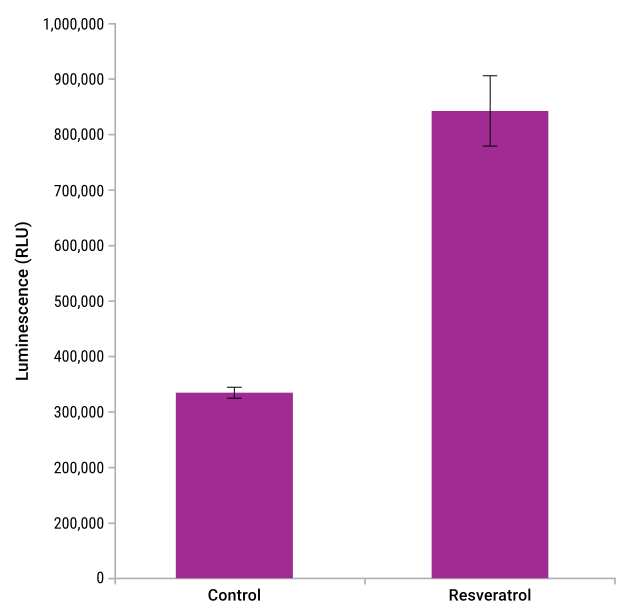
The FAO-Glo™ Assay successfully detected inhibition and activation of the pathway. HEK293 cells were treated with 20µM etomoxir, an inhibitor of FAO (left). HepG2 cells were treated with 10µM resveratrol, a known activator of FAO (right).
Protocols
No protocols available
Specifications
Catalog Number:
選択製品の構成品内容
| Item | Part # | Size |
|---|---|---|
FAO Substrate |
CS3271A05 | 1 × 20μl |
FAO Luciferin Detection Reagent |
CS3271A06 | 1 × 10ml |
FAO Reconstitution Buffer |
CS3271A07 | 1 × 10ml |
d-Cysteine, 100X |
V251A | 1 × 100μl |
U.S. Pat. Nos. 9,273,343 and 9,951,372, European Pat. No. 2751089, Japanese Pat. No. 6067019 and other patents pending.
Related Products
類似製品
Triglyceride-Glo™ Assay
リパーゼによる酵素反応で放出されるグリセロールの測定によりトリグリセリドを検出
J3160, J3161
Glycerol-Glo™ Assay
グリセロールキナーゼとグリセロール-3-リン酸デヒドロゲナーゼ酵素とルシフェラーゼ発光反応を利用したグリセロール測定
J3150, J3151
Cholesterol/Cholesterol Ester-Glo™ Assay
NADH の生成とルシフェラーゼ発光を生じるプロルシフェリンの活性化によりコレステロールを測定
J3190, J3191
Mitochondrial ToxGlo™ Assay
生体異物への暴露によるミトコンドリア機能障害を予測するためのアッセイ
G8000, G8001
関連製品
GloMax® Discover System
発光・蛍光・吸光度測定に対応した高性能マイクロプレートリーダー
GM3000
CellTiter-Glo® 2.0 Cell Viability Assay
試薬の安定性が向上したCellTiter-Glo®、ATP検出に基づく細胞増殖の定量が可能
G9241, G9242, G9243, MG1010
Glucose-Glo™ Assay
様々なサンプル種よりグルコースを簡便に検出
J6021, J6022
RealTime-Glo™ MT Cell Viability Assay
72 時間まで培養細胞の生存性をモニタリングできる発光アッセイ
G9711, G9712, G9713
Do you want to learn more about our cellular energy metabolism tools and the innovative technology that powers these assays? Explore the metabolic activity assay portfolio.