NanoBRET® Bromodomain/Histone Interaction Assays
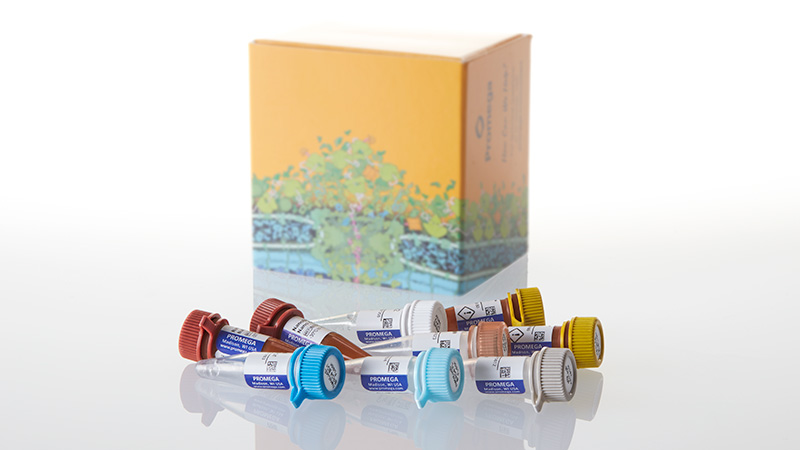
Protein Interaction Assays to Study BRD/Histone Interactions in Live Cells
- Study full-length bromodomain/histone-containing proteins or fragments
- Detect protein interactions in live cells, even at low expression levels
- Choose from prebuilt or custom assay options
- All but NanoBRET® BRD4/Histone H3.3 Interaction Assay are discontinued

Catalog Number:
Size
Catalog Number: N1830
細胞内環境で BRD/ヒストン相互作用の研究を
ブロモドメイン(BRD)を含むタンパク質は核内タンパク質複合体の重要な構成要素で、クロマチン修飾酵素のリクルートやアセチル化クロマチンの転写調節に関与しています。BRDを含むタンパク質とアセチル化ヒストンとのタンパク質間相互作用(PPI)は細胞の健全性や分化に重要なエピジェネティックな調節に重要な役割を果たし、BRDの変調不全は疾患形成における重要なイベントに関与するため薬剤標的として注目されています。
NanoBRET™ Bromodomain Interaction Assay は、生細胞内のクロマチンにおいてBRDを含むタンパク質と完全長のヒストンの相互作用研究を行うことができます。完全長のBRDタンパク質に加えてBRD断片 (BRD4, BRD9 および BRPF1) も含まれており、ドメインのみの相互作用も理解することができます。
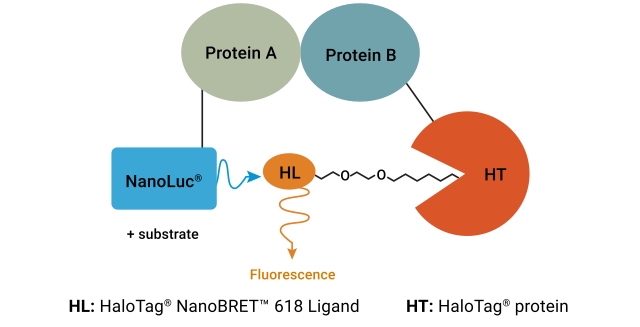
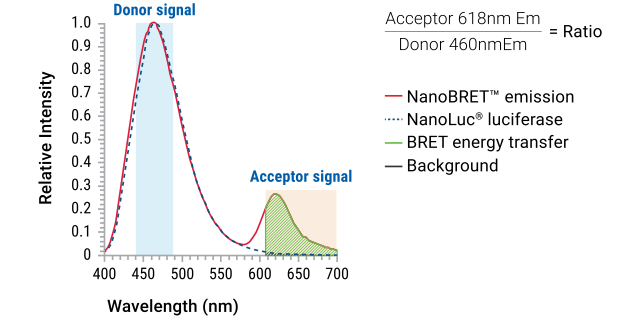
NanoBRET™ assay テクノロジーは生物発光ドナー(NanoLuc® ルシフェラーゼ)から蛍光アクセプター(HaloTag® NanoBRET™ 618 Ligand)へのエネルギー転移をベースにしています。NanoLuc® ルシフェラーゼおよび HaloTag® タンパク質を標的となるタンパク質にそれぞれ融合させ、低レベルで細胞内に発現させます。これにより真の細胞生理を反映するタンパク質相互作用のモニタリングやスクリーニングの実験を行うことができます。 NanoBRET™ assay は完全な可逆性を有しており、タンパク質相互作用の誘導実験、阻害実験の両方を行うことができます。
NanoBRET™ BRD/Histone Protein Interaction Assay のデータ例
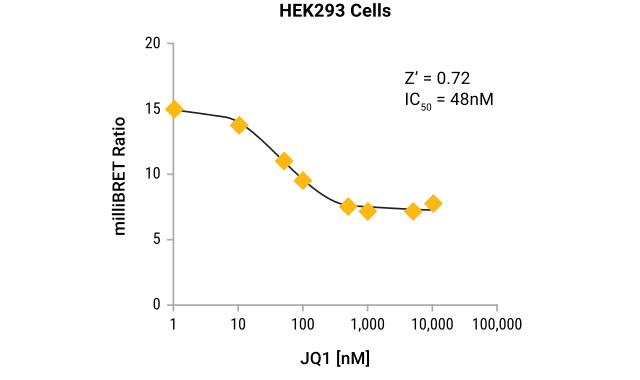
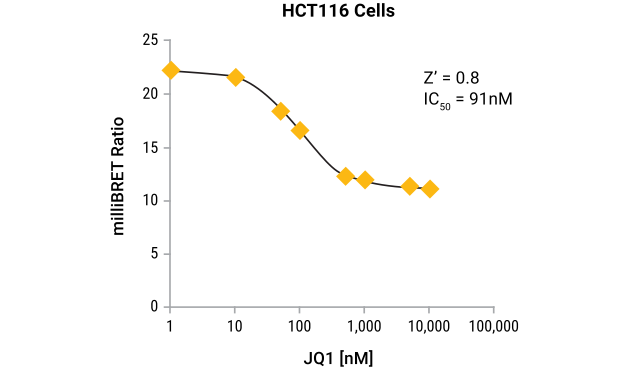
Example BRD4 Assay Data: Monitoring Inhibition of Protein Interactions
This example shows the dose-dependent inhibition of BRD4 protein interaction with Histone H3.3 by JQ1 as measured by the decrease in the NanoBRET®™ signal.
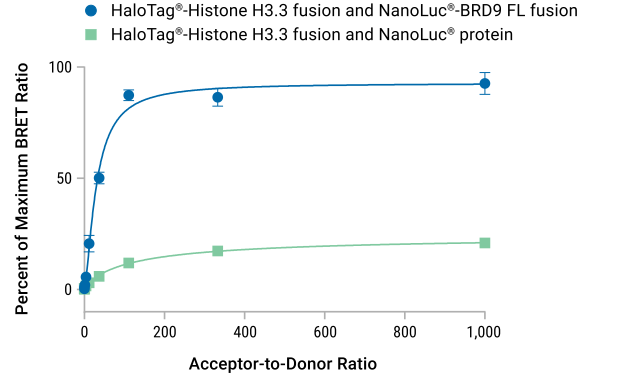
Example BRD9 Assay Data: High Assay Specificity
In this donor saturation assay, cells were transfected with a constant amount of BRD9 FL- or BRD9 BD-NanoLuc® Fusion donor DNA and increasing amounts of Histone H3.3-HaloTag® Fusion acceptor DNA to represent increasing acceptor-to-donor (A:D) ratios. The negative control was a set of samples containing HaloTag® protein alone. Both NanoBRET® BRD9/Histone H3.3 Interaction Assays generate hyperbolic curves, which indicate detection of a specific BRET interaction.
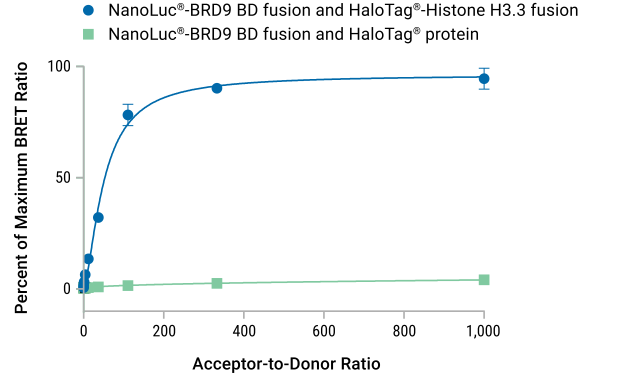
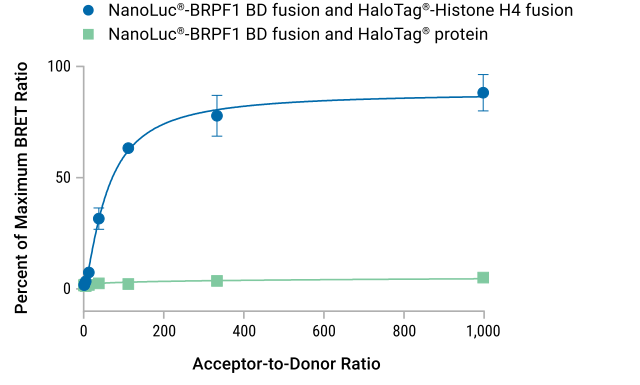
Example BRPF1 Assay Data: Assay Specificity
This donor saturation assay was performed by transfecting cells with a constant amount of BRPF1- or BRPF1-NanoLuc® Fusion donor DNA and increasing amounts of Histone H4-HaloTag® Fusion acceptor DNA to represent increasing amounts of acceptor-to-donor (A:D) ratios. The negative control was HaloTag® protein alone in place of the Histone H4-HaloTag® fusion. The NanoBRET® BRPF1/Histone H4 Interaction Assays generate hyperbolic curves, which indicate detection of a specific BRET interaction.
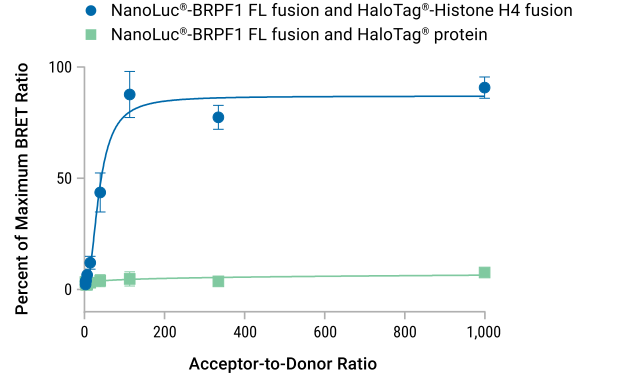
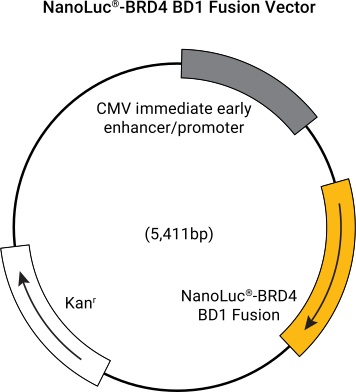
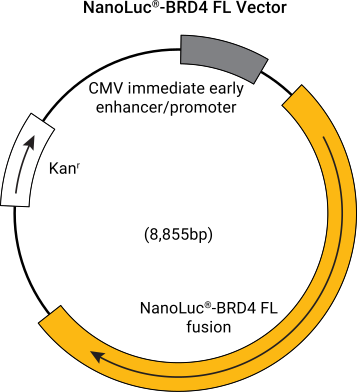
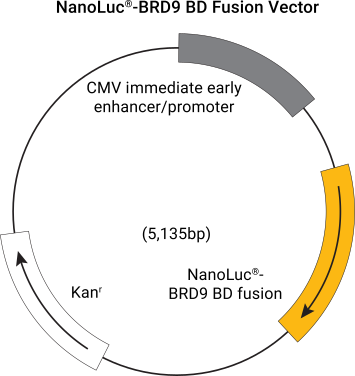
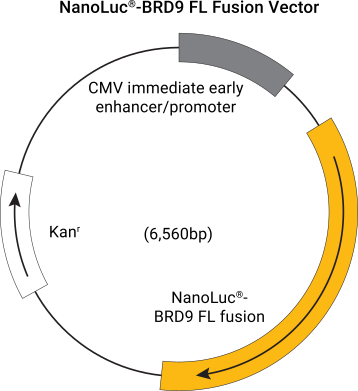
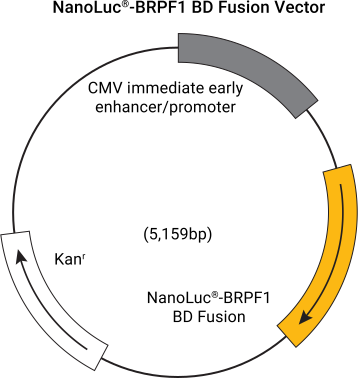
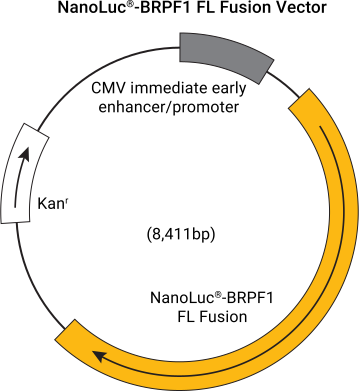
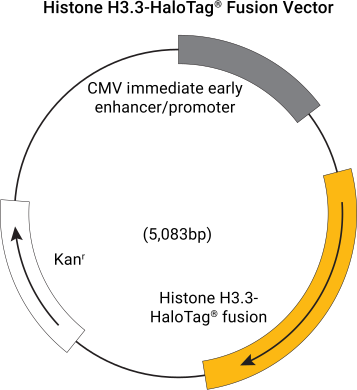
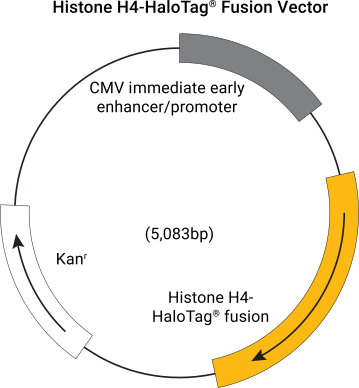
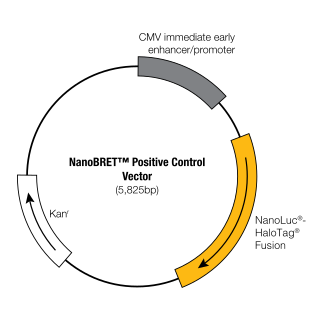
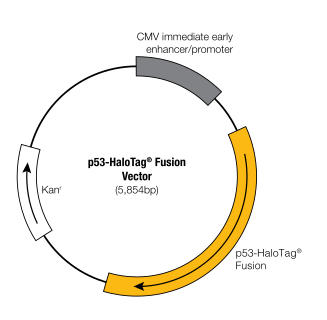
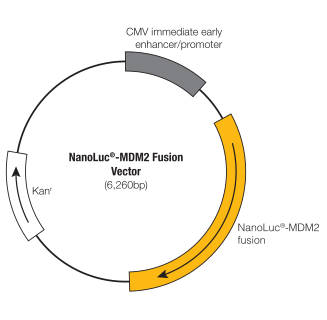
BRD / ヒストン用ベクター
Protocols
Complete Protocol
Specifications
Catalog Number:
選択製品の構成品内容
| Item | Part # | Size | Available Separately |
|---|---|---|---|
HaloTag® NanoBRET® 618 Ligand |
G980A | 2 × 20μl | View Product |
NanoBRET® Nano-Glo® Substrate |
N157A | 2 × 50μl | View Product |
p53-HaloTag® Fusion Vector |
N159A | 1 × 20μg | |
NanoLuc®-MDM2 Fusion Vector |
N160A | 1 × 20μg | |
Histone H3.3-HaloTag® Fusion Vector |
N167A | 1 × 20μg | |
NanoLuc®-BRD4 FL Fusion Vector |
N169A | 1 × 20μg | |
NanoLuc®-BRD4 BD1 Fusion Vector |
N170A | 1 × 20μg |
NanoBRET® Interaction Assays Limited Use Label License
BY USE OF THIS PRODUCT, RESEARCHER AGREES TO BE BOUND BY THE TERMS OF THIS LIMITED USE LABEL LICENSE. If researcher is not willing to accept the terms of this label license, and the product is unused, Promega will accept return of the unused product and provide researcher with a full refund.
Researcher may use this product for research use only; no transfer or commercial use of this product is allowed. Commercial use means any and all uses of this product or derivatives by a party in exchange for consideration, including, but not limited to: (1) use in further product manufacture; (2) use in provision of services, information or data; and (3) resale of the product or its derivatives, whether or not such product or derivatives are resold for use in research. Researcher shall have no right to modify or otherwise create variations of the nucleotide sequence of the luciferase gene or the HaloTag® gene except that researcher may create fused gene sequences provided that the coding sequence of the resulting luciferase gene or HaloTag® gene has no more than four deoxynucleotides missing at the affected terminus compared to the intact gene sequence. No other use of this product or derivatives is authorized without the prior express written consent of Promega.
In addition, researcher must:
(1a) use Nano-Glo®-branded luminescent assay reagents (LARs) for all determinations of luminescence activity of this product and its derivatives, or
(1b) contact Promega to obtain a license for use of the product and its derivatives with LARs not manufactured by Promega.
For uses of Nano-Glo®-branded LARs intended for energy transfer (such as bioluminescence resonance energy transfer) to acceptors other than a genetically encoded autofluorescent protein, researcher must:
(2a) use NanoBRET®-branded energy acceptors (e.g., BRET-optimized HaloTag® ligands) for all determinations of energy transfer activity by this product and its derivatives, or
(2b) contact Promega to obtain a license for use of the product and its derivatives for energy transfer assays to energy acceptors not manufactured by Promega.
Researcher may transfer derivatives to others for research use provided that at the time of transfer a copy of this label license is given to the recipients and recipients agree to be bound by the terms of this label license. With respect to any uses outside this label license, including any diagnostic, therapeutic, prophylactic or commercial uses, please contact Promega for supply and licensing information. PROMEGA MAKES NO REPRESENTATIONS OR WARRANTIES OF ANY KIND, EITHER EXPRESSED OR IMPLIED, INCLUDING FOR MERCHANTABILITY OR FITNESS FOR A PARTICULAR PURPOSE, WITH REGARD TO THE PRODUCT. The terms of this label license shall be governed under the laws of the State of Wisconsin, USA.
Nano-Glo® Luciferase Assay System Limited Use Label License
BY USE OF THIS PRODUCT, RESEARCHER AGREES TO BE BOUND BY THE TERMS OF THIS LIMITED USE LABEL LICENSE. If researcher is not willing to accept the terms of this label license, and the product is unused, Promega will accept return of the unused product and provide researcher with a full refund.
Researcher may use this product for research use only; no commercial use is allowed. Commercial use means any and all uses of this product by a party in exchange for consideration, including, but not limited to (1) use in further product manufacture; (2) use in provision of services, information or data; and (3) resale of the product, whether or not such product is resold for use in research. Researcher shall have no right to modify or otherwise create variations of the product. No other use or transfer of this product is authorized without the prior express written consent of Promega.
For uses of Nano-Glo®-branded reagents intended for energy transfer (such as bioluminescence resonance energy transfer) to acceptors other than a genetically encoded autofluorescent protein, researchers must:
(i) use NanoBRET®-branded energy acceptors (e.g., BRET-optimized HaloTag® ligands) for all determinations of energy transfer activity by this product; or
(ii) contact Promega to obtain a license for use of the product for energy transfer assays to energy acceptors not manufactured by Promega.
With respect to any uses outside this label license, including any diagnostic, therapeutic, prophylactic or commercial uses, please contact Promega for supply and licensing information. PROMEGA MAKES NO REPRESENTATIONS OR WARRANTIES OF ANY KIND, EITHER EXPRESSED OR IMPLIED, INCLUDING FOR MERCHANTABILITY OR FITNESS FOR A PARTICULAR PURPOSE, WITH REGARD TO THE PRODUCT. The terms of this label license shall be governed under the laws of the State of Wisconsin, USA.
U.S. Pat. No. 8,809,529, European Pat. No. 2635582, Japanese Pat. No. 5889910 and other patents and patents pending.
U.S. Pat. Nos. 8,420,367, 8,748,148, 9,593,316 and 9,873,866; European Pat. Nos. 2374875, 2492342 and 2502990; and Japanese Pat. Nos. 5680302 and 5840117.
U.S. Pat. Nos. 8,557,970, 8,669,103, 9,777,311, 9,840,730, 9,951,373, 10,233,485, 10,633,690, 10,774,364, 10,844,422, 11,365,436, 11,661,623, 11,667,950; European Pat. Nos. 2456864, 2635595, 2990478, 3181687, 3409764; Japanese Pat. Nos. 6038649, 6155424, 6227615, 6374420, 6539689; and other patents and patents pending.
U.S. Pat. No. 10,024,862; Japanese Pat. No. 7676487; and other patents and patents pending.
U.S. Pat. Nos. 9,056,885, 10,139,400 and 10,215,751; European Pat. No. 2782916; and Japanese Pat. Nos. 6522339, 6574821 and 7227741.
Resources
No related resources available