ルシフェラーゼレポーターと検出試薬
ルシフェラーゼレポーターアッセイの立上げの際には2つの重要な要素(ルシフェラーゼレポータータンパク質の種類とレポーターを検出するための試薬)を考慮する必要があります。この2つの要素の特性が組み合わさり、アッセイ全体の性能が決定されます。実験の目的に最適なレポーターと検出試薬を選択することで、ルシフェラーゼレポーターアッセイをカスタマイズし、研究に最適なソリューションを構築することができます。
ルシフェラーゼレポーターの比較
プロメガは3種類の異なるルシフェラーゼレポーターを提供しています(NanoLuc® ルシフェラーゼ、レニラルシフェラーゼ、ホタルルシフェラーゼ)。以下の表で、それぞれの主要な特性を比較できます。詳細はこちらの記事「レポーター遺伝子とその応用」でご覧いただけます。
| ルシフェラーゼレポーター | |||||
|---|---|---|---|---|---|
| Firefly Luciferase | |||||
| NanoLuc® Luciferase | |||||
| Renilla Luciferase |
*転写応答とより密接に連動される目的で、不安定化バージョンを利用可能です。
*分泌型バージョンが利用可能です。
検出試薬に関する考慮すべきこと
各レポーターに対して複数の検出試薬が利用可能です。最適なアッセイ試薬を選択するための主な検討事項は以下の通りです。
- アッセイに必要なシグナル強度とダイナミックレンジ
- シグナルの安定性、半減期(サンプル処理のワークフローに影響します)
- 細胞ライセート作成の有無:非ホモジニアスアッセイでは、試薬添加の前にライセート作成のステップが別途必要です。ホモジニアスアッセイは、培養中の細胞に直接試薬を添加するため、サンプルの前処理が不要です。
- レポーターの検出を細胞ライセートで行うのか生細胞で行うのか
- シングルレポーターなのかデュアルレポーターなのか
ルシフェラーゼのシグナル強度と安定性
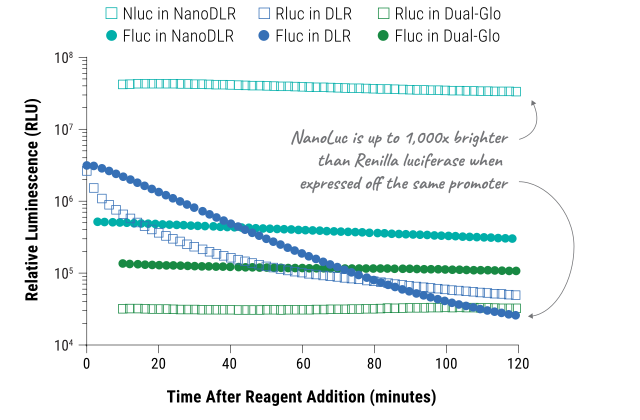
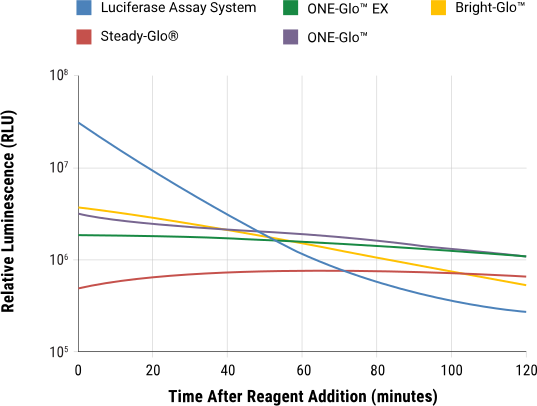
ルシフェラーゼアッセイの特性の比較
| Luciferase Detected | Assay Reagent | Ideal For | Signal Half-Life | Sensitivity | Number of Steps | Live Cell Assay? | Injectors Needed? |
|---|---|---|---|---|---|---|---|
| NanoLuc, Firefly | Nano-Glo® Dual-Luciferase® Reporter Assay System (NanoDLR) | Homogenous Fluc/Nluc dual-reporter detection with flexibility in choice of primary reporter. Provides highest sensitivity for both reporters when a stable signal is required and highest sensitivity option when Nluc is used as the primary reporter. Ideal for low to high-throughput processing when 2 primary reporters or internal control is needed. | 2 hours each | +++++ (Nluc) ++ (Fluc) |
2 (lysate optional) | No | Optional |
| Firefly, Renilla |
Dual-Luciferase® Reporter Assay System (DLR) | Non-homogenous Fluc/Rluc dual-reporter detection. Requires lysate creation and 2 injectors for delivery. Ideal for small sample numbers when maximum Fluc sensitivity and internal control are needed. | 10 minutes, 2 minutes | ++++ (Fluc) ++++ (Rluc) |
3 | No | Yes 2 injectors |
| Firefly, Renilla |
Dual-Glo® Luciferase Assay System | Homogenous Fluc/Rluc dual-reporter detection with reduced sensitivity and stable signal. Ideal for high-throughput processing of Fluc reporter when Rluc is used as the internal control. | 2 hours each | + (Fluc/Rluc) |
2 | No | No |
| NanoLuc | Nano-Glo® Luciferase Assay System | Homogenous Nluc detection with bright, stable signal. Ideal for low to high-throughput processing when maximum sensitivity is required. | 2 hours | +++++ | 1 | No, unless used with secNluc | No |
| NanoLuc | Nano-Glo® Live Cell Assay System | Live cell Nluc detection with brightest signal. Ideal for single timepoint analysis when high sensitivity is needed in a non-lytic assay. | Up to 2 hours | ++++ | 1 | Yes | No |
| NanoLuc | Nano-Glo® Vivazine™ Live Cell Substrate | Live cell Nluc detection with intermediate signal and stability. Ideal for kinetic analysis lasting multiple hours. | Up to 24 hours | +++ | 1 | Yes | No |
| NanoLuc | Nano-Glo® Endurazine™ Live Cell Substrate | Live cell Nluc detection with most stable signal. Ideal for multi-day kinetic analysis. | Up to 72 hours | ++ | 1 | Yes | No |
| Firefly | Luciferase Assay System | Non-homogenous Fluc detection requiring lysate creation and injector delivery. Ideal for small sample numbers when maximum Fluc sensitivity is needed. | 10 minutes | ++++ | 2 | No | Yes |
| Firefly | Bright-Glo® Luciferase Assay System | Homogenous Fluc detection offering the brightest signal and shortest half-life. Ideal for high-throughput processing when high sensitivity is required. | 30 minutes | +++ | 1 | No | No |
| Firefly | ONE-Glo™ Luciferase Assay System | Homogenous Fluc detection with moderate signal and half-life. Ideal for high- or ultrahigh-throughput processing. | 45 minutes | ++ | 1 | No | No |
| Firefly | ONE-Glo™ Ex Luciferase Assay System | Homogenous Fluc detection with moderate signal and half-life and improved storage stability. Ideal for high- or ultrahigh-throughput processing and repeat use. Also used to detect Fluc in NanoDLR allowing consistent use between single and dual assays. | 2 hours | ++ | 1 | No | No |
| Firefly | Steady-Glo® Luciferase Assay System | Homogenous Fluc detection with maximum signal stability and reduced signal. Ideal for high-throughput applications when extended luminescence is required. | 5 hours | + | 1 | No | No |
| Renilla | Renilla Luciferase Assay System | Non-homogenous Rluc detection requiring lysate creation and injector delivery. Ideal for small sample numbers when maximum Rluc sensitivity is needed. | 2 minutes | ++++ | 2 | No | Yes |
| Renilla | Renilla-Glo Luciferase Assay System | Homogenous Rluc detection with increased signal stability. Ideal for high-throughput processing. | 40+ minutes | ++ | 1 | No | No |
| Renilla | ViviRen™ Live Cell Substrate | Live cell Rluc detection with highest signal. Ideal for single time point or short non-lytic analysis when highest sensitivity is required. | 10 minutes | +++ | 1 | Yes | No |
| Renilla | EnduRen™ Live Cell Substrate | Live cell Rluc detection with greatest stability. Ideal for extended kinetic analysis. | Up to 24 hours | + | 1 | Yes | No |
生物発光レポーターアッセイのデザイン
レポーターアッセイの設計について詳しく知るには… 2部構成の「発光レポーターアッセイの設計」ガイドでは、最適な実験用レポーターの選択、実験デザイン、データ解析方法についての基本的な考慮事項を順を追ってご紹介します。
Part 1: Choosing Your Experimental Reporter
Part 2: Assay Normalization Options
Related Resources
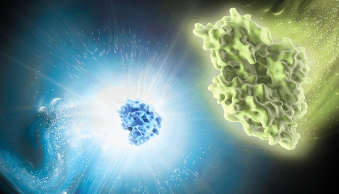
Guide: Reporter Genes and their Applications

Webinar: Understanding Reporter Assay Design
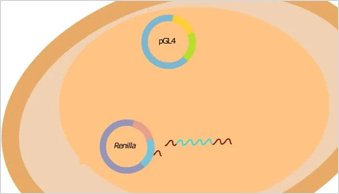
Blog: Tips for Performing Dual-Reporter Assays