Forensic DNA Analysis: Capillary Electrophoresis Workflows
Promega provides complete solutions for analysis of forensic DNA samples by capillary electrophoresis (CE). These include reagents and kits for all steps in CE analysis workflows.
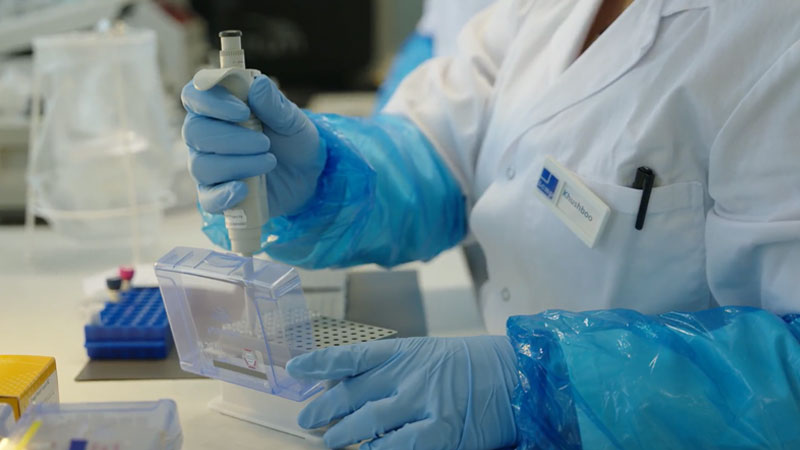
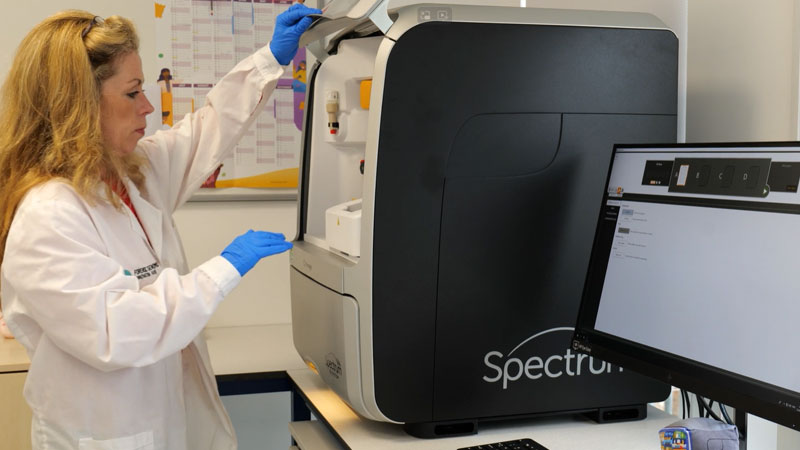
Products include preprocessing reagents for swabs and card punches prior to direct amplification of database samples, and DNA isolation systems for casework samples. We also provide the PowerQuant® System for accurate, human-specific DNA quantitation, and PowerPlex® Systems for STR amplification of Y-specific or autosomal DNA that meet global and regional database requirements. For sample analysis, the Spectrum family of CE instruments provides both low- and high-throughput sample processing options.
CE Analysis Product Groups
前処理とサンプル分離
スワブやカードパンチをダイレクト増幅する際の前処理用試薬、困難なケースワークサンプルの前処理用試薬、精子と上皮細胞を簡便に分離するための試薬などです。
DNAの単離
純度の高い DNAを回収するためのDNA 精製システムで自動化による時間の節約も可能
ヒト特異的DNA定量
STR 増幅前にヒトゲノム DNA 濃度を決定するシステムや DNA の完全性の評価および PCR 阻害剤の検出用システム
STR増幅
プロメガのSTRシステムは拡張されたCODISコアローカス、ENFSI推奨ローカス、Penta D や Penta E ローカスを増幅するシステムで、法医学鑑定や親子鑑定、血縁鑑定に使用します。
解析
効率的な STR 分析とより良い結果を得るためにデザインされた装置

CE Analysis Basics
The vast majority of the human genome is identical among diverse individuals. However, there are small regions of variation, especially in areas with repetitive sequences. One example is short tandem repeats (STRs) that can vary in length among individuals, with each repeat consisting of three to five nucleotides of DNA. Analysis of these repeats reveals a characteristic pattern for each individual that is inherited from paternal and maternal DNA. Forensic DNA databases use these patterns of STRs for human identification, and each national database has requirements for specific STR loci that are included.
To characterize these STR patterns, or DNA profiles, human genomic DNA is amplified using the polymerase chain reaction (PCR) with sets of primers for each STR being tested. The primers are labeled with fluorescent dyes, and the amplified products are separated according to size by capillary electrophoresis (CE). Fluorescence imaging by the CE instrument results in a set of peaks for each dye channel, which together constitute an electropherogram that serves as a DNA “profile” for that individual. Statistical analysis of the DNA profile and comparison to reference databases can predict whether the individual matches a known DNA profile, with a high power of discrimination.
Testimonials and Case Studies
Across the world, forensic scientists are pushing the boundaries of what’s possible in DNA analysis—bringing clarity, accuracy and justice to the cases that matter most. Every profile generated and every case solved begins with their skill, perseverance and commitment to truth. These stories celebrate the professionals whose dedication and expertise continue to advance forensic science, turning complex challenges into confident results.
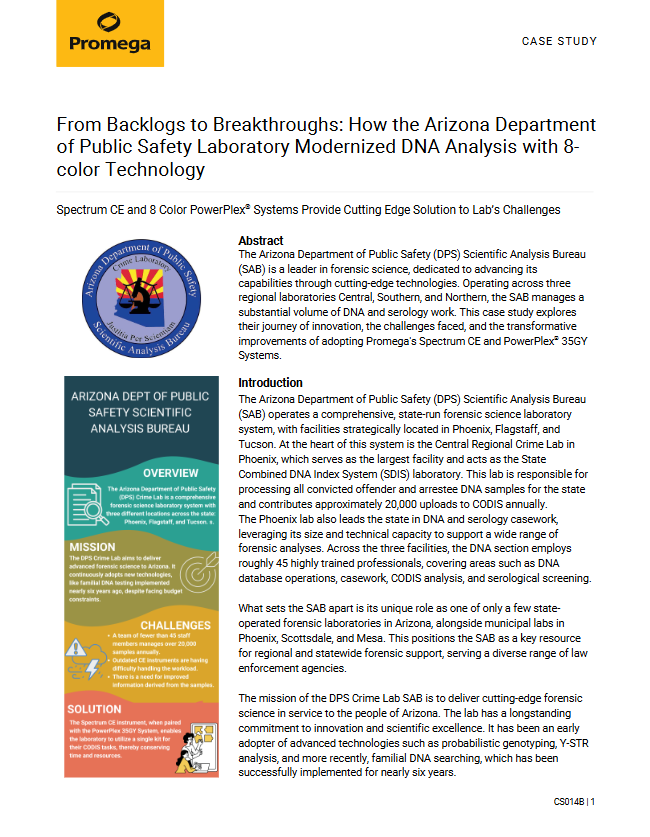
From Backlogs to Breakthroughs: How the Arizona Department of Public Safety Laboratory Modernized DNA Analysis with 8- color Technology